
rea
Reverse engineer anything with agents, from app behavior down to native binaries.
- 471k
- TypeScript
- MIT
- 1 h ago
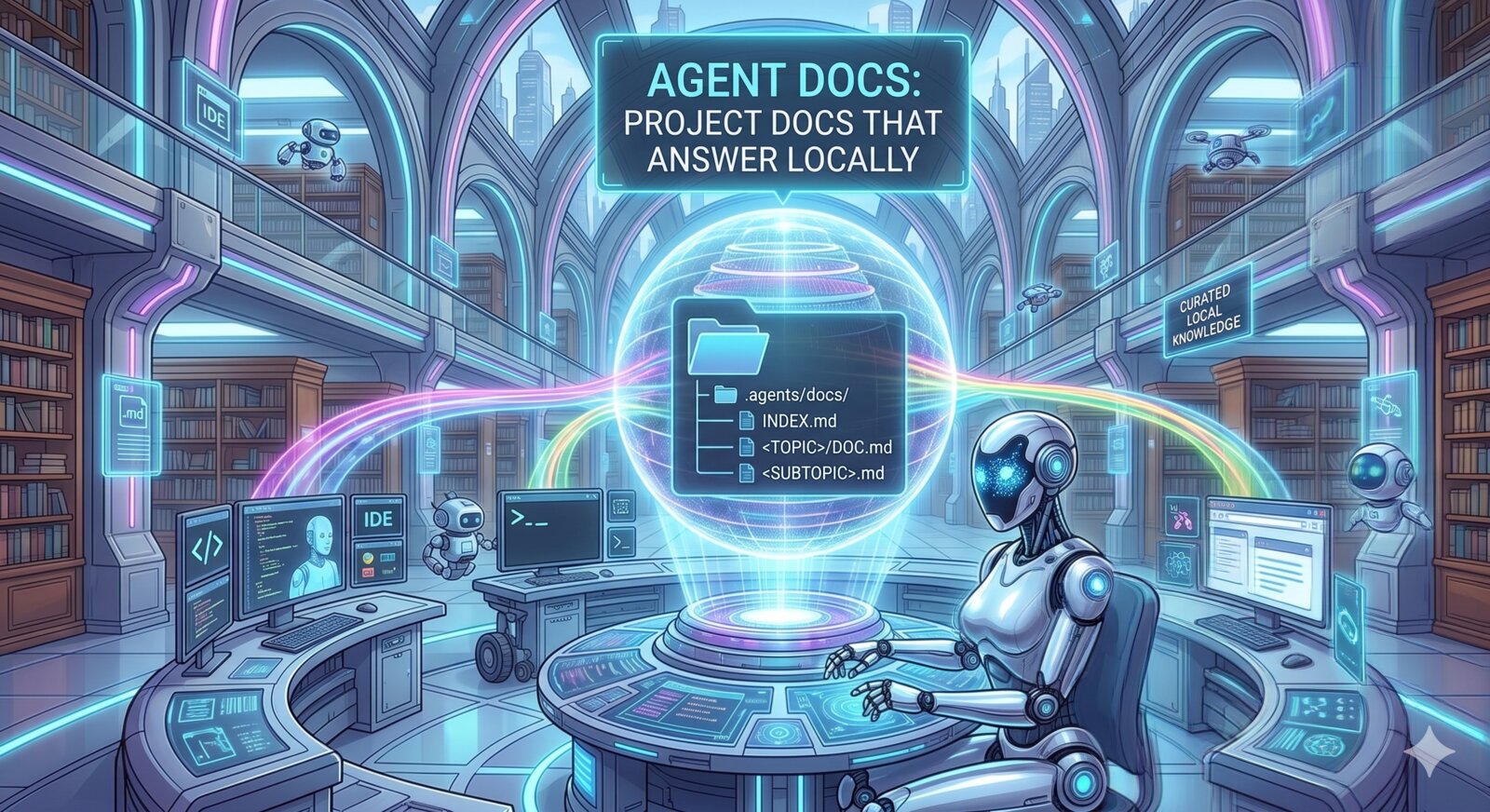
Project docs that answer locally before the web — file-based Agent Skills for Claude Code, Gemini CLI, GitHub Copilot, and OpenCode.
Repo fmind/agent-docs, read from GitHub 11 min ago. fmind has not joined Take My Repo.
fmind/agent-docs is a public repo on GitHub by fmind. Project docs that answer locally before the web — file-based Agent Skills for Claude Code, Gemini CLI, GitHub Copilot, and OpenCode. It declares the MIT license on GitHub. It has 3 stars and last changed on 2026-10-24. It is archived: its maker no longer maintains it. Nobody has reviewed it on Take My Repo yet, which says nothing about its quality. Read from GitHub on 2026-11-20.

Project docs that answer locally before the web.
Agent Docs is a small set of file-based Agent Skills that give a coding agent a curated, on-disk reference for the tools, services, and frameworks your project actually uses. Install once — the same skills/ tree runs in Claude Code, Gemini CLI, GitHub Copilot, and OpenCode.
The payoff: the agent lands on the right upstream URL in one hop instead of N web searches, and every agent on every run gets the same answer for the same question.
Agents waste a lot of turns web-searching for things the project already commits to.
Agent Docs flips the default: the project ships a tiny, dated reference set under .agents/docs/, and agents read it before reaching for the web.
use-agent-docs teaches the agent to consult .agents/docs/INDEX.md before web research — fewer round-trips, more reproducible answers.DOC.md leads with a structured documentation map — the upstream nav, captured as one-line link entries grouped by section — plus a brief summary and key concepts. The agent lands on the right upstream URL in one hop instead of N web searches. Soft cap: ~100 lines per DOC.md, ~150 for a subtopic deep-dive.use-agent-docs fetches upstream for depth and the user opts in.last_verified, optional upstream_commit, sources.{docs,repo,changelog,release}). INDEX.md propagates the oldest date per topic — agents see the staleness floor at a glance, and tooling can parse it without regex.refresh-agent-docs reads the frontmatter and short-circuits when upstream hasn't moved (commit-pin match, or no changelog entries newer than last_verified); falls through to a link-rot scan of the documentation map. Pages it cannot re-verify get a visible > ⚠ Stale banner until the next successful run.HOOKS.md, EXTENSIONS.md — each with its own refresh clock.skills/ tree drives Claude Code, Gemini CLI, GitHub Copilot, and OpenCode./gather-agent-docs — Seed .agents/docs/ with a navigation map for the project's key topics (tools, services, frameworks). Default writes INDEX.md and one DOC.md per topic with summary, key concepts, and a structured link index of upstream pages. On request ("deepen X"), enriches a topic with up to ~5 paste-ready snippets./use-agent-docs — Before web-searching for a project topic, check .agents/docs/INDEX.md and scan the matching DOC.md's documentation map for the right upstream URL. No-op when the file is missing./refresh-agent-docs — Re-verify entries against upstream: repair dead links in the documentation map, update drifted snippets, bump last_verified dates, insert a > ⚠ Stale banner when a page can't be re-verified. Default scope is every topic; targets a single topic or topic/subtopic when named. Smart-refresh path uses upstream_commit / sources.changelog to skip work when upstream hasn't changed.The three pair into a small loop:
gather → use → (drift detected) → refresh → use → ...
       ↘ (depth needed) → deepen ↗
$ /gather-agent-docs
  → inspects the project (package manifests, CI configs, IaC files), picks 3–8 topics
  → fetches one upstream nav source per topic (sidebar / docs home / sitemap)
  → writes .agents/docs/<topic>/DOC.md with frontmatter, summary, key concepts, documentation map
  → writes .agents/docs/INDEX.md with one dated line per topic
  → "Seeded 5 topics under .agents/docs/. Review the diff before committing."

$ /use-agent-docs       # invoked implicitly whenever the agent is about to web-search
  → reads INDEX.md, opens DOC.md, scans the documentation map for the right entry
  → fetches the matching upstream URL on demand (one hop, not N web searches)
  → optionally backfills a paste-ready snippet to DOC.md's Patterns section if the user opts in

$ /gather-agent-docs deepen gemini-cli
  → revisits gemini-cli's DOC.md; captures up to 5 high-frequency snippets (T2) with inline _Source: …_
  → adds a Patterns section, bumps last_verified

$ /refresh-agent-docs gemini-cli
  → tries the cheap path first: matches upstream_commit / scans sources.changelog since last_verified
  → falls through to a link-rot scan of the documentation map; repairs moved/renamed pages
  → re-verifies any captured snippets against their inline _Source: …_ links
  → "gemini-cli: links repaired (DOC.md), unchanged (HOOKS.md, smart path)."
examples/ ships a worked sample of what /gather-agent-docs produces in an end-user project — two topics (gemini-cli, cloud-run), one with a deepened subtopic split (HOOKS.md). The directory layout matches what the skill writes into your own repo under .agents/docs/.
/plugin marketplace add fmind/agent-docs
/plugin install agent-docs@agent-docs
For local development, point the marketplace at a clone:
/plugin marketplace add /path/to/agent-docs
/plugin install agent-docs@agent-docs
gemini extensions install fmind/agent-docs
For local development (live-link, edits reload on next session):
gemini extensions link /path/to/agent-docs
agy plugin install https://github.com/fmind/agent-docs
For local development (live-link, edits reload on next session):
agy plugin install /path/to/agent-docs
To use these skills in OpenCode, place or clone the skill directories under .agents/skills/ (for project scope) or ~/.agents/skills/ (for global scope). OpenCode automatically discovers and loads them.
Copilot CLI:
copilot plugin marketplace add fmind/agent-docs
copilot plugin install agent-docs@agent-docs
For local development, point the marketplace at a clone:
copilot plugin marketplace add /path/to/agent-docs
copilot plugin install agent-docs@agent-docs
VS Code — point chat.pluginLocations at a local clone:
// settings.json
"chat.pluginLocations": {
  "/path/to/agent-docs": true
}
agent-docs/
├── AGENTS.md                          # canonical context — read by Copilot; @-included by CLAUDE.md / GEMINI.md
├── skills/                            # Agent Skills (open standard)
│   ├── gather-agent-docs/SKILL.md     # user-facing: seed .agents/docs/
│   ├── use-agent-docs/SKILL.md        # user-facing: read .agents/docs/ before web research
│   └── refresh-agent-docs/SKILL.md    # user-facing: re-verify entries against upstream
├── examples/                          # worked sample of what /gather-agent-docs produces
├── .claude-plugin/                    # Claude Code plugin manifest + bundled marketplace
├── gemini-extension.json              # Gemini CLI extension manifest
├── plugin.json                        # GitHub Copilot manifest
└── .github/workflows/ci.yml           # lint via pre-commit
In an end-user project after /gather-agent-docs:
.agents/docs/
├── INDEX.md                           # one dated entry per topic, pointing to its DOC.md
└── <topic>/                           # kebab-case slug (e.g. gemini-cli, cloud-run)
    ├── DOC.md                         # entry point: summary, key concepts, documentation map, optional patterns
    └── <SUBTOPIC>.md                  # optional deep dive (e.g. EXTENSIONS.md, HOOKS.md)
INDEX.md's per-topic date is the oldest last_verified among the topic's files (DOC.md plus any subtopic files), so the index honestly reflects the staleness floor.
Each DOC.md aims to be a self-sufficient navigation map for the topic (soft cap ~100 lines; ~150 for subtopic deep-dives). Split a subsystem into a sibling <SUBTOPIC>.md when all of the following hold:
The link map alone rarely justifies a split — surfaces are wide but each entry is one line. Fold a subtopic back into DOC.md if it shrinks below its own weight.
Issues and PRs welcome. Two house rules to keep the skills lean:
AGENTS.md §Conventions) — they load into agent context on every run, so verbosity costs budget.The npm overrides keep the existing linter on patched YAML, Markdown, and TOML parsers and update KaTeX. Keep these overrides until upstream dependencies include the fixes. Use Node.js 22.12 or newer. Run npm ci, npm run lint, and uvx pre-commit run --all-files to check the locked dependencies. npm audit still reports an upstream braces advisory without a published fix; passing checks does not mean the development dependencies are vulnerability-free.
MIT — see LICENSE.
fmind/agent-docs is a public repo on GitHub by fmind. Project docs that answer locally before the web — file-based Agent Skills for Claude Code, Gemini CLI, GitHub Copilot, and OpenCode.
It declares the MIT license on GitHub.
Its maker has not tagged a system, so it is unknown here. Its README says what it needs.
Open "Take it" on its page: Take My Repo writes an install plan for your machine and hands it to your AI agent (Claude Code, Codex or Cursor), which asks you before each step. Take My Repo has not tested it on any machine.
No. It is archived on GitHub: its maker no longer maintains it.
Nobody has reviewed it on Take My Repo yet, which says nothing about its quality.
Reverse engineer anything with agents, from app behavior down to native binaries.
Cross-platform environment manager for Antigravity CLI, Manager & IDE — eligibility patching on Windows, Linux and macOS (x64/ARM64), plus multi-account switching and quota monitoring on Windows.
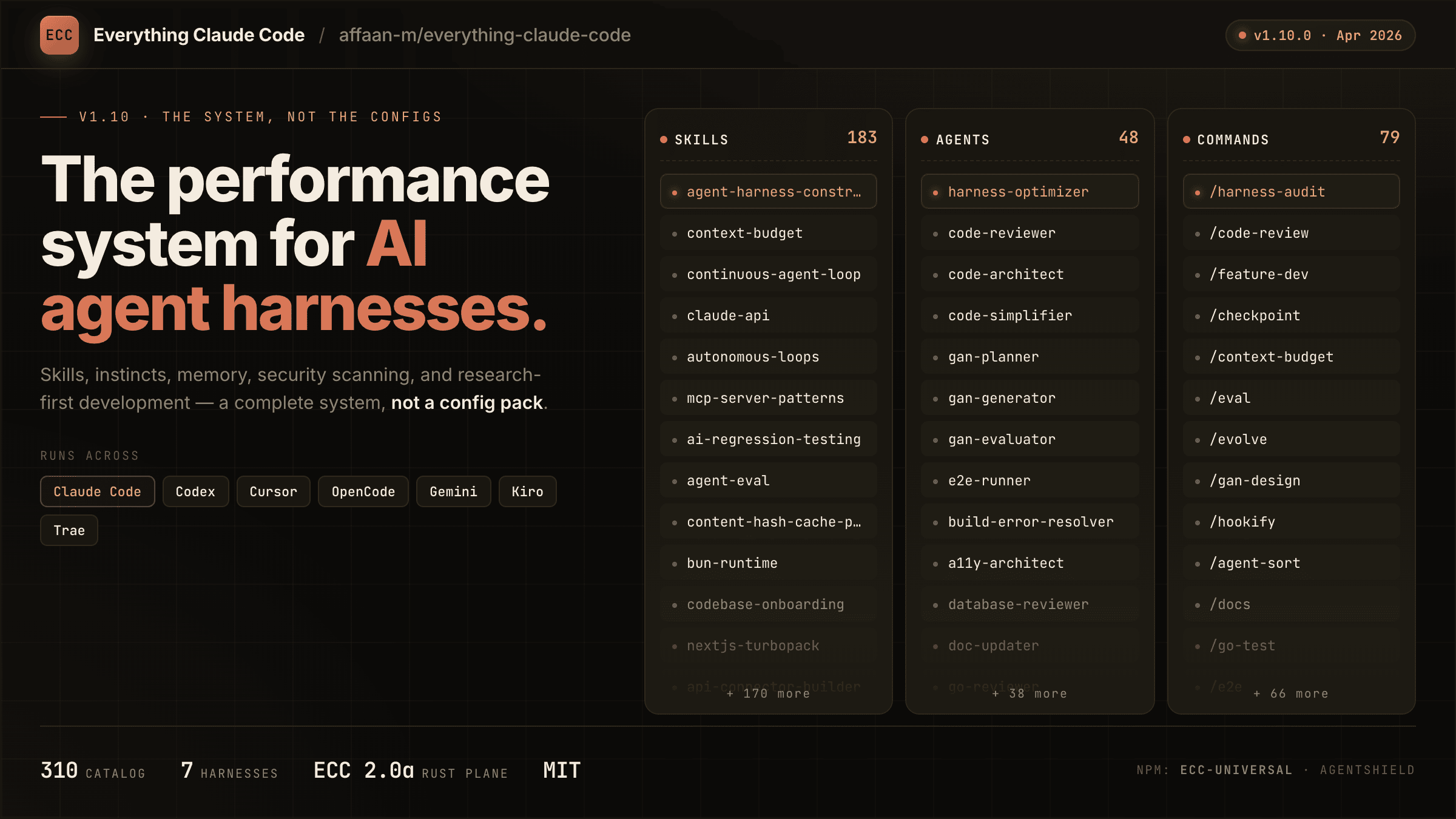
The agent harness performance optimization system. Skills, instincts, memory, security, and research-first development for Claude Code, Codex, Opencode, Cursor and beyond.
MCP server that orchestrates language servers into agent-native workflows. 65 tools, 30 CI-verified languages.
agy-mcp: Model Context Protocol (MCP) server for Google Antigravity CLI (agy) with async supervision and completion wakes.
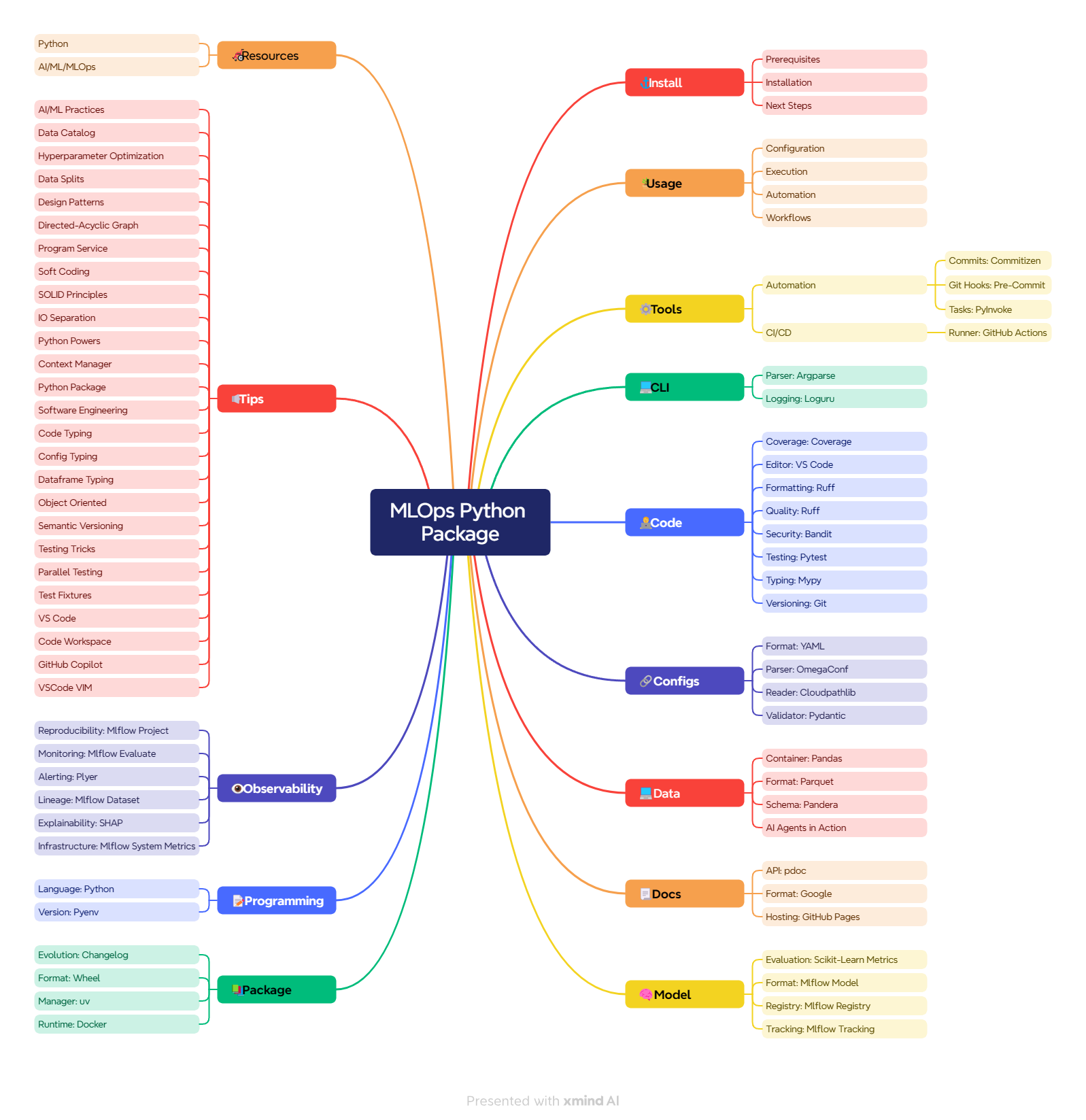
Production-shaped MLOps Python package and reference implementation of the MLOps Coding Course: MLflow, scikit-learn, Pydantic, Pandera, uv, and mise.
Learn how to create, develop, and maintain a state-of-the-art MLOps code base
Start building and deploying Python packages and Docker images for MLOps tasks.
AI-driven, CLI-first dotfiles for Linux & macOS — chezmoi + mise, Fish, Neovim, and a typed Python CLI