
AutoGPT
AutoGPT is the vision of accessible AI for everyone, to use and to build on. Our mission is to provide the tools, so that you can focus on what matters.
- 188k
- Python
- 2 h ago
to Gen AI or not to Gen AI ? is it a threat to human jobs, or just hype ? read this
Repo jfullstackdev/generative-ai-review, read from GitHub 3 d ago. jfullstackdev has not joined Take My Repo.
jfullstackdev/generative-ai-review is a public repo on GitHub by jfullstackdev. to Gen AI or not to Gen AI ? is it a threat to human jobs, or just hype ? read this. It declares no license on GitHub. Public does not mean open source: without a license, nobody is granted the right to reuse it. It has 15 stars and last changed on 2024-10-20. Nobody has reviewed it on Take My Repo yet, which says nothing about its quality. Read from GitHub on 2026-11-20.
When ChatGPT was fully released to the public, it caught us off guard like a global catastrophe. Schools were shocked because it could almost answer everything, and businesses scrambled to get in on the hype. AI funding and stocks hit an all-time high !
Before we delve into GenAI, it's good to know its hierarchy.
Artificial Intelligence (AI)
Machine Learning (ML)
Deep Learning (DL)
Generative AI
Large Language Models (LLMs)
Specific Implementations
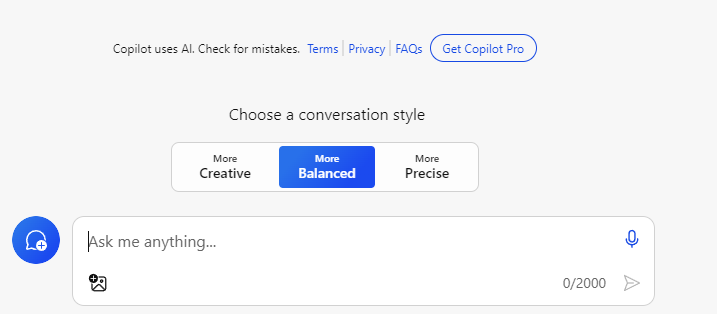
In the past, Microsoft Copilot, the one integrated with bing.com,
provided three options for our answers : creative, balanced
or accurate.
This is because GenAI always works on patterns of data.
If I ask, say, "give me some list of personalities that ... ", there are times it will give personalities that should not be included in the list. Remember, it's working on patterns so it may give random answers.
So we still do our own research particularly if this is critical info.
As of this writing too, the ChatGPT on Web has this disclaimer : "ChatGPT can make mistakes. Consider checking important information."
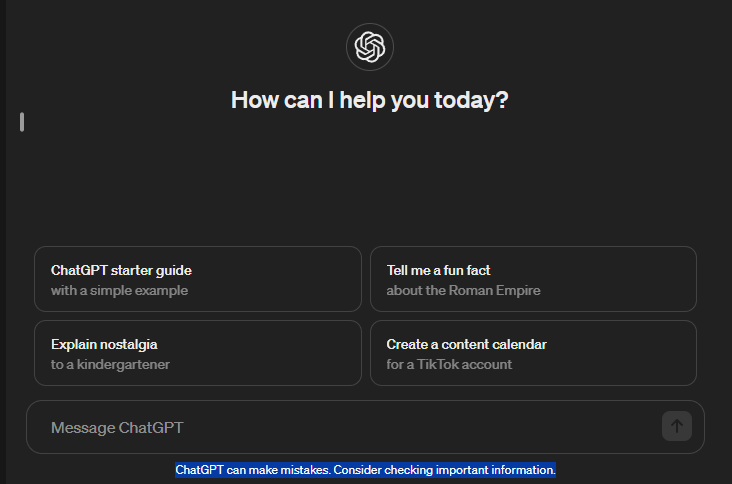
So humans still need to double check the reliability of data.
Even Microsoft Copilot, as of this writing too, has the disclaimer : "Copilot uses AI. Check for mistakes."
Both ChatGPT and Microsoft Copilot can now search for the latest information on the web.
However, I wonder how accurately they can answer questions based on this data. Are they truly trained on the most recent information? Additionally, what happens if the new content they access is misleading? Do they have systems in place to check for misinformation and disinformation?
These AI models can learn from human interactions, but this learning is limited to individual sessions and does not persist across all interactions, as they are not primarily trained on that data.
As for GitHub Copilot, which is tailored for programmers, it currently does not have access to new data. Therefore, it may struggle with deprecated or newly introduced functions.
So, yes, this is one limitation of GenAI.
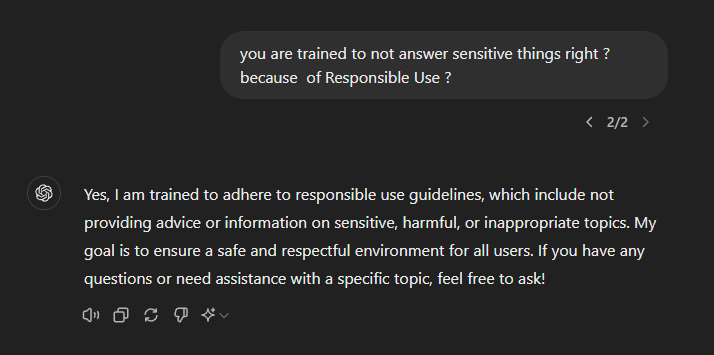
When I'm too engrossed in asking questions and seeking answers from GitHub Copilot, it can suddenly blur or tag my inquiries as "Responsible Use of AI" in certain situations. This can be quite inconvenient, right ?
You can't get answers on sensitive or inappropriate topics. Even when you ask about such topics, it will respond in a way that reflects this limitation.
In the past, I frequently encountered downtimes and rate limiting when using different GPTs due to high demand. Imagine being deeply engrossed in coding during a continuous discussion, only for it to suddenly fail to answer, causing you to lose your train of thought ! This used to happen all the time.
ChatGPT Web was quite frustrating, often hanging during use. In my experience, even though it was hanging, closing and reopening the session would complete the answer. However, it has recently improved, allowing for continued use.
In the past, without signing in, Microsoft Copilot on the Web was limited to 4 questions, while the mobile app allowed for 10. Currently, I’m using it with the updated UI, and I no longer see these limitations, but I cannot yet verify any changes regarding this limitation.
Generative AI (GenAI) is a form of narrow AI that responds based on trained data. It excels at creating content like text, images, and music, but its capabilities are limited to the patterns it has learned. It was never intended as True Intelligence.
In contrast, Artificial General Intelligence (AGI) is a theoretical concept that aims to surpass human intelligence. Unlike GenAI, AGI will not branch off from any GenAI we have now; it is independent and seeks to replicate the full range of human cognitive abilities, though it has its own nuances.
So, in short, GenAI ended up just like any other human tool.
Even them battle misinformation and disinformation. If you ask any GPT how they recognize misinformation and disinformation, they will say, there is a tagging mechanism but they are also saying it's very challenging. I just wonder with the multitude of data they are being trained on, did humans really tag all of them ? It's unscalable I think so.
With GitHub Copilot, it only accesses your code when you send it directly.
Even using @workspace doesn't seem to grant full codebase access all the
time. In contrast, Devin AI has full access to your setup, as claimed by
other users.
But the question still remains: will everyone feel comfortable with this level of access or even the simple act of signing in? Personally, for critical or extended discussions, signing in feels unavoidable. However, whenever I can avoid it, I take that option. For example, I never sign in during the Windows setup, and I haven't even upgraded to Windows 11.
When it comes to generalized AI systems like ChatGPT and Microsoft Copilot, the sign-in requirement has raised concerns. Even Elon Musk expressed frustration over Windows 11 and the integration of Copilot into the operating system.
At first, I thought it was all a gimmick. Then I tried the traditional Copilot on the Editor, just suggesting random code and repeating my code. Then I suspected more that it was truly just a gimmick.
Then came Copilot Chat, tried some questions or pieces of code to refactor then I realized this technology is truly working.
Now I heavily use it. And mind you, in coding, I feel like I've matured 5 years in coding. It's very efficient when you know how to use this tool. Not all situations you can find on StackOverflow, this AI can answer.
Here is the list of my techniques applicable to both coding and general use:
Ask the Right Questions: Clear, specific questions often lead to more accurate and relevant responses from the AI.
Work with Smaller Pieces of Code: Breaking tasks into smaller chunks reduces errors and simplifies debugging, making it a more effective approach. This should not come as a surprise because it's also one of the best coding practices.
Work with Smaller Chunks of Information: Similar to coding pieces, dividing complex tasks or ideas into smaller, more digestible segments enhances understanding and reduces the likelihood of mistakes. Remember, Generative AI can hallucinate when bombarded with data, so this approach helps maintain clarity and accuracy.
Start a New Session: If your current session feels cluttered and the AI's responses seem off, restarting can help reorganize and restructure the conversation for better clarity.
Confirm When in Doubt: If you spot a mistake or feel uncertain, you can ask it to confirm whether its answer is correct, such as by saying, "Can you confirm your answer is correct?" This prompt can confirm that the answer is accurate or regenerate its answer if it's not accurate. You can even provide it with correct information to help it lead to a more accurate response.
Generative AI Can Derive New Conclusions: With the right approach, you can teach Generative AI to recognize bits of information, focus on them, recognize nuances, and derive new insights. Even if GenAI is just a form of narrow AI, this capability represents a powerful use of this AI, enabling it to make informed decisions, offer personalized recommendations, and contribute to problem-solving across various domains.
Much like humans in various fields and subfields, GenAI now have specialties too. We might assume that ChatGPT can answer everything GitHub Copilot can, but their focuses are different. For example, Copilot is specifically designed for coding and provides deeper codebase context. However, with the right prompts and approach, ChatGPT can also offer useful coding solutions. The key is knowing how to leverage each tool effectively. I'm using both, and each can be helpful in different situations — even ChatGPT can spot things that Copilot might overlook.
Yes, AI tools are helpful for humans, even in coding. They act like programming partners, providing efficient suggestions and saving time. However, you still need to check and analyze the AI's output before implementing it.
Even experienced developers can’t fully grasp every aspect of an evolving tech stack. GenAI helps by answering questions in minutes, delivering more context-specific responses than what you might find on Stack Overflow or through documentation.
While AI can build a system, it lacks direction without human input. Once you have a fully functional codebase, relying too much on tools like GitHub Copilot can cause issues, as they don't understand the system as well as human developers do.
In demos, AI can build starter projects, but its usefulness diminishes when modifying existing code. Clients can't use AI to build entire systems without a developer, as they'll still face challenges piecing everything together and solving problems only developers understand.
In my estimation, we primarily use generative AI (GenAI) for quick information, but traditional sources from the web remain irreplaceable. While we might rely on GenAI for about 75% of our needs, we still verify the information against reputable sources on the web for the remaining 25%.
First was the World of Info, where the Internet brought us a wealth of knowledge. Second was Intelligent Assistants, like Siri and Alexa, simplifying our tasks. Third is the latest GenAI but still based on patterns, suggesting a future where AI not only understands patterns but also makes autonomous decisions, potentially reshaping every aspect of our lives.
By now, AI improvements are becoming too fast. We are just abruptly satisfied with GitHub Copilot but there are already emerging AI Software Engineers like Devin AI.
But will we ever reach the point that it thinks like humans, or even surpasses them in intelligence, as proposed by theoretical AGI? I don't think so. I believe humans will always be the ultimate judge of what they are capable of doing. After all, letting AGI decide on its own without any control from humans is really dangerous.
Time can only tell and I'm thrilled waiting for that time on whether I can be proven wrong or not.
jfullstackdev/generative-ai-review is a public repo on GitHub by jfullstackdev. to Gen AI or not to Gen AI ? is it a threat to human jobs, or just hype ? read this.
It declares no license on GitHub. Public does not mean open source: without a license, nobody is granted the right to reuse it.
Its maker has not tagged a system, so it is unknown here. Its README says what it needs.
Open "Take it" on its page: Take My Repo writes an install plan for your machine and hands it to your AI agent (Claude Code, Codex or Cursor), which asks you before each step. Take My Repo has not tested it on any machine.
Its last change on GitHub was on 2024-10-20. Take My Repo does not judge from that whether it is maintained.
AutoGPT is the vision of accessible AI for everyone, to use and to build on. Our mission is to provide the tools, so that you can focus on what matters.
Nobody has reviewed it on Take My Repo yet, which says nothing about its quality.
The agent that grows with you
An AI skill that provides design intelligence for building professional UI/UX across multiple platforms.
A collection of (mostly) technical things every software developer should know about
f.k.a. Awesome ChatGPT Prompts. Share, discover, and collect prompts from the community. Free and open source — self-host for your organization with complete privacy.
if you are new or you don't know this and if you just really want to get the A+ rank or higher, read this
GitHub Pages will enable you to simply turn your GitHub repo into a website




