BeatTrackerJS
Live beat tracker that runs entirely in the browser: it listens to audio,
locks onto the tempo, shows which beat of the bar you are on and how hard it was
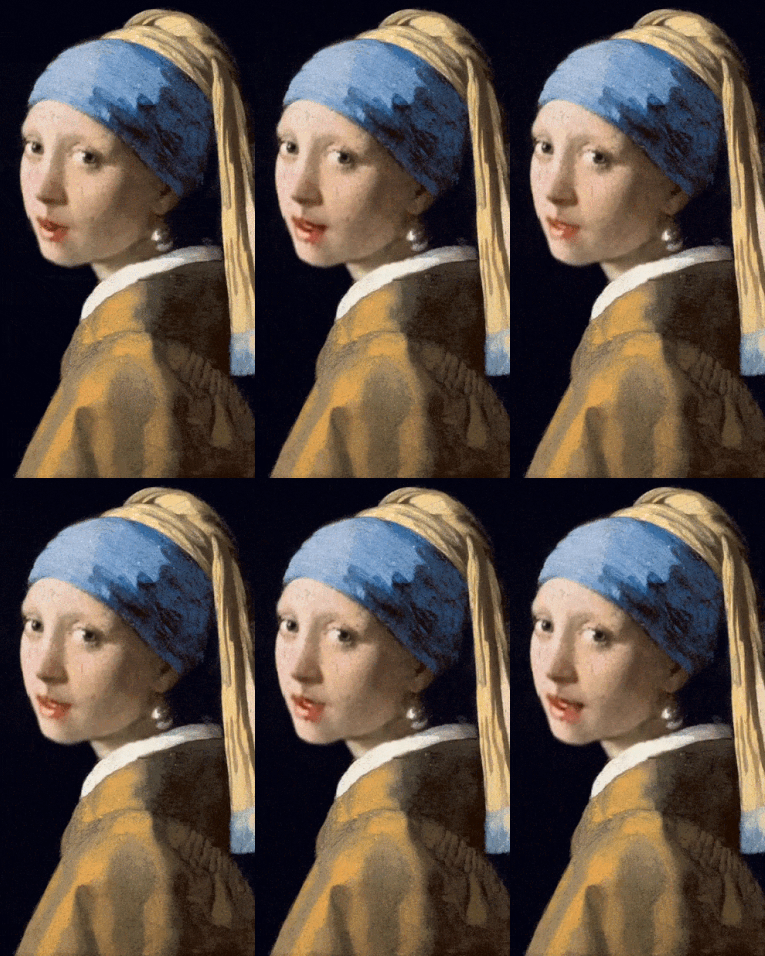
accented — and a little robot dances to it.
No backend, no WASM, no dependencies. madmom's
neural model is ported to plain JavaScript and produces exactly the same beats
as the original, down to float32 rounding noise.
▶ Try it — hit "Listen to input" (microphone
or system monitor) or "Tab audio" to pick up whatever is playing in another tab.
What it does
- Tempo and phase from madmom's online tracker (BLSTM + HMM), 1.9 ms per
10 ms hop: 19% of a core.
- Automatic meter among 3, 4 and 6, or pinned by hand from 2 to 6. It is
built to survive a playlist: the meter is re-decided as tracks change instead
of latching onto the first one it saw.
- Position inside the bar, with the 1 located by the downbeat model.
- Per-hit accent: each beat lights up in proportion to the energy that
actually sounded there, so the accent pattern becomes visible.
- A dancing robot with twelve moves, or auto-rotation every 4 bars. A move
separates its look from its timing, so the same step runs at half time, on
the beat or on eighths — the arms can be on eighths while the hips follow the
bar, which is what makes the meter readable at a glance. Some moves are
continuous instead of stepped: the hips roll across a whole bar, or the body
walks away for one bar and back the next.
- Silence gate, so it does not invent a tempo when there is no music.
How it works
audio ─▶ AudioWorklet ─▶ features ─▶ 8x LSTM ensemble ─▶ HMM ─▶ beats
   │      (441 hops)     (FFT +       (with peepholes)  (forward)   │
   │                      filterbank                                ▼
   │                      + log + diff)                          grid
   │                                                       (tempo, meter)
   └─▶ rolling 6 s window ─▶ bidirectional BLSTM ─▶ phase vote ─▶ the "1"
             (in a Web Worker)     (downbeat model)
The beat tracker is causal and runs in real time. The downbeat model is
bidirectional — it cannot run in streaming — so it lives in a Web Worker over a
6 s window, and every beat votes for its position in the bar.
Run locally
python3 serve.py 8090 # serves web/, no caching
It has to be over HTTP: ES modules and AudioWorklet do not work from file://.
In production HTTPS is required (the microphone demands it); Netlify handles that
for you.
Tests
npm test                   # parity against madmom, stage by stage
node test/silence.mjs      # the gate: noise vs music
node test/gapfill.mjs      # filling in skipped beats
node test/meter.mjs a.f32  # meter on songs of known meter
node test/playlist.mjs a.f32   # meter recovery when the track changes
node test/dance.mjs        # dance subdivisions, without a browser
The parity tests need fixtures that are not versioned (~11 MB). Regenerate them
with the exporters:
AUDIO_E2E=/path/to/a/song.mp3 python tools/export_madmom.py
python tools/export_downbeats.py 3
That needs madmom==0.16.1 in Python (see
docs/MIGRATION.md).
Deploy
Static site, no build. netlify.toml already sets publish = "web".
netlify deploy --prod
Or connect the repo from the Netlify dashboard: it picks up netlify.toml and
there is nothing to configure.
Read more
- docs/MIGRATION.md — how madmom was ported to
JavaScript: what was exported as data instead of translated, how it was
verified stage by stage, and the three times the test failed while being right.
- docs/EXPERIMENTS.md — which other trackers were
tried before settling on madmom (BeatNet, BeatNet+, BEAST, a classic tracker
with no ML), what metrics they were compared with, and what came out.
Layout
web/                 what gets published
├── index.html, app.js, styles.css
├── worklet.js       collects 441-sample hops
├── downbeat-worker.js
├── src/             the port: features, network, HMM, grid, accent, meter, dance
└── public/models/   exported weights (2.7 MB)
tools/               exporters from madmom (Python)
test/                parity and behaviour (Node)
docs/                the two long documents
serve.py             development server with caching disabled
Credits
The model is madmom's (Böck et al.), BSD.
This repo only ports it.
MIT.