
rea
Reverse engineer anything with agents, from app behavior down to native binaries.
- 473k
- TypeScript
- MIT
- 1 h ago
Offline-first mesh messenger for blackouts, disasters and crowded places. Bluetooth LE mesh + Nostr, bitchat-compatible, clean-room Kotlin, MIT.
Repo wolfqing/openchat, read from GitHub 1 min ago. wolfqing has not joined Take My Repo.
wolfqing/openchat is a public repo on GitHub by wolfqing. Offline-first mesh messenger for blackouts, disasters and crowded places. Bluetooth LE mesh + Nostr, bitchat-compatible, clean-room Kotlin, MIT. It declares the MIT license on GitHub. It is written mainly in Kotlin, has 1 stars and last changed on 2026-11-20. Nobody has reviewed it on Take My Repo yet, which says nothing about its quality. Read from GitHub on 2026-11-22.

Offline-first mesh messenger for blackouts, disasters and crowded places. Bluetooth LE mesh when there is no network. Nostr when there is. No accounts, no phone numbers, no servers.
Download APK · Protocol spec · Changelog · Roadmap · Contributing · Security · 中文说明

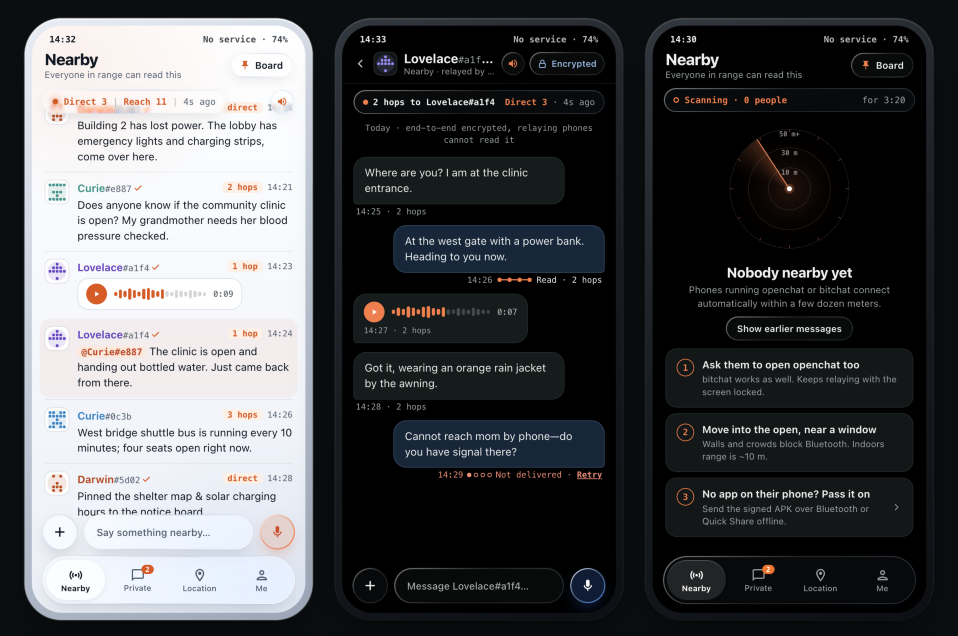
The three screens that define the app: Nearby in Radiant Light with its signal band and floating Liquid Glass chrome, a private chat in OLED Dark with flat matte bubbles and a delivery path on every message, and the radar you see when nobody is in range. Rendered from the v0.7.5 design prototype.
When the network goes down, the phones in a building, a stadium or a neighbourhood can still talk to each other over Bluetooth. Every phone relays for every other phone, so a message hops from person to person until it reaches someone it was meant for. That is what the bitchat protocol does, and its protocol, code and whitepaper are in the public domain.
openchat is an independent, MIT-licensed client for that same network. It is built to speak exactly bitchat's wire protocol and adds nothing to it; that has not yet been checked against a stock bitchat phone (see Status). What it changes is who the app is for and how it looks:
| State | |
|---|---|
| Android app | v0.7.14 preview. 223 unit tests, 9.6 MB APK, 18 languages. Changes in CHANGELOG.md |
| Tried on devices | v0.7.6 was verified on an Android 14 (API 34) emulator across onboarding, cold launch, MeshService startup, all four tabs and Board, previews up to v0.7.2 ran on an Android 15 emulator, and earlier previews ran on one real phone; see CHANGELOG.md per release. The mesh itself has not been tried between real phones: Bluetooth range, multi-hop relaying, connection limits and behaviour in the background are untested in the field. The emulator has no Bluetooth |
| Interop with stock bitchat | Not yet verified. Implemented from the spec, upstream test vectors and envelopes recorded from bitchat builds. Verification against a stock bitchat client is the next milestone |
| Security audit | None. Everything on the wire is upstream's; upstream had one audit (Cure53, 2025-11) with findings still open |
| Release signing | v0.6.0 and later are signed with a dedicated release key; its certificate fingerprint is in SECURITY.md. Previews up to v0.5.0 were debug-signed and must be uninstalled first |
| iOS | Not started |
Do not rely on openchat where being identified has serious consequences. The app says so on first launch. See SECURITY.md.
Download the APK from the latest release. Android 8.0 or newer. If you still have a preview up to v0.5.0 installed, uninstall it first: those were signed with a debug key and the release key will not install over them.
Check the file before installing, especially if it reached you phone to phone. The SHA-256 is in the release notes and in CHANGELOG.md; the signing certificate fingerprint is in SECURITY.md.
shasum -a 256 openchat-*.apk
apksigner verify --print-certs openchat-*.apk
Allow Nearby devices when asked; that is Bluetooth. On Android 11 and older the same request appears as a location permission, because Bluetooth scanning needed one then; the mesh does not read your location. Notifications are optional. The microphone is asked for the first time you record, the camera when you scan a verification code, location only if you tap "Use my approximate location" for location channels, and unknown-app installation only if you install an update inside the app.
Open the Me tab and, under "Pass openchat to people near you", tap Share installer to send the app to the phones around you. Do this before the outage.
This is a preview. Before you count on it:
Every feature below is implemented to bitchat's wire format and covered by unit tests. That is not the same as tried in the field; Status says what has been. The only things openchat adds are local: how the mesh is drawn on screen.
Talk in the header or + → Live Walkie-Talkie)
and hold the PTT disc to transmit live over Bluetooth mesh—one speaker at a
time, played immediately with chirp/Roger tones and leaving zero chat bubbles./ping and /trace show the round trip, the hop count and an estimated
path to someone on the mesh. IRC-style commands exist for people who want
them: /msg /who /block /fav /group /pay /drop /help and friends./pay sends a Cashu ecash token; tokens in messages show as a card with
amount, mint and memo and an "Open in wallet" button. The app never talks
to a mint.#xxxx suffix derived from the key, so two
people with the same name cannot be confused.The full feature-to-file map and the test suites are in android/README.md.
 Nearby (Radiant Light). Direct 3, reach 11, with floating Liquid Glass navigation and composer chrome. Every sender has an emblem drawn from their key; every message says how far it travelled. |
 Private (OLED Dark). Flat matte bubbles with four dots per message: sent, on its way, delivered, read. Clean circular action buttons and floating optical-glass chrome. |
 Nobody nearby. The most common state during an outage, so it gets a real screen: an azimuth radar with 10, 30 and 50 m rings and three things that help. |

Choosing a location channel. A real screenshot: v0.7.2 on an Android 15 emulator. Drag to spin, pinch to zoom; the cell under the crosshair is the channel.
The three above are rendered from the clickable prototype in docs/design/ui-prototype.html. The design rationale is in docs/design/ui-direction.md. Sample nicknames are historical figures.
| bitchat | openchat | |
|---|---|---|
| Wire protocol | bitchat's | Built to be identical: same packets, same Noise handshake, same group, board, bridge, prekey and Nostr formats. Not yet checked against a stock client |
| Code | iOS: public domain. Android: GPL-3.0 | Written from scratch in Kotlin. No bitchat source is used. The GPL Android code was never read |
| Licence | Unlicense / GPL-3.0 | MIT |
| Who it is for | "IRC vibes", by design | People who have never seen IRC |
| What you see | A terminal-style chat | The mesh itself: signal band, hops, emblems, delivery paths, radar |
| Positioning | General purpose | Infrastructure failure |
| Relationship | — | Independent client. Not affiliated with or endorsed by the bitchat project |
The protocol was documented from the public-domain iOS source into docs/protocol-spec.md, a byte-level specification in thirty sections that did not exist before. If you are building anything that talks to bitchat, that document and docs/bitchat-protocol-notes.md may be useful on their own.
| Document | What it is |
|---|---|
| docs/protocol-spec.md | The wire spec openchat implements: packets, relaying, Noise sessions, couriers, sync, groups, board, bridge, prekeys, Cashu, live voice, and how the mesh is shown |
| docs/bitchat-protocol-notes.md | What the upstream protocol actually does, with numbers, audit history and open issues |
| docs/phase0-findings.md | 183 App Store reviews and 764 upstream issues classified; the go/no-go that started this |
| docs/design/ui-direction.md | The UI direction: two layers, five elements, why the mesh is visible |
| docs/roadmap.md | Phases, exit criteria and the conditions under which this project stops |
| CHANGELOG.md | Every release, with what changed, the test count and the APK hash |
| SECURITY.md | How to report a vulnerability, what is in scope, release signing |
| CONTRIBUTING.md | The three rules, DCO, what to ask about first |
| NOTICE | Third-party components and public-domain data |
Requires JDK 17 and the Android SDK with platform 36.
cd android
echo "sdk.dir=$HOME/Library/Android/sdk" > local.properties   # macOS; on Linux usually $HOME/Android/Sdk
./gradlew :app:testDebugUnitTest :app:assembleDebug
The debug APK lands in app/build/outputs/apk/debug/. Release builds use
assembleRelease (R8, ARM only, about 9 MB) and read the signing key from
android/keystore.properties, which is not in the repository; without it
the build falls back to the debug key. On every pull request CI runs the
unit tests, lint, and both the debug and the release build, and fails if
the shrinker cannot read the Kotlin metadata.
Issues, interop reports, translations and field notes are all welcome. Three rules are firm, and CONTRIBUTING.md explains why:
Commits are signed off under the Developer Certificate of Origin. There is no CLA.
Android first, from scratch, against the spec: done through v0.7.14. Next is interop verification against stock bitchat phones, then iOS, then one real pilot in a disaster-preparedness drill or a crowded venue. Each phase has an exit criterion and a kill condition in docs/roadmap.md.
"openchat" is a working name and collides with several unrelated LLM projects on GitHub. A final name is pending; the repository will redirect when it changes.
MIT for everything in this repository, see LICENSE. No upstream code is included. Third-party libraries and the public-domain data shipped in the app are listed in NOTICE.
Built on the work of the bitchat contributors, whose decision to put the protocol in the public domain made an independent client possible. Not affiliated with or endorsed by them. Coastlines, borders and city positions in the globe picker are from Natural Earth, also public domain.
wolfqing/openchat is a public repo on GitHub by wolfqing. Offline-first mesh messenger for blackouts, disasters and crowded places. Bluetooth LE mesh + Nostr, bitchat-compatible, clean-room Kotlin, MIT.
It declares the MIT license on GitHub.
Its maker has not tagged a system, so it is unknown here. Its README says what it needs.
Open "Take it" on its page: Take My Repo writes an install plan for your machine and hands it to your AI agent (Claude Code, Codex or Cursor), which asks you before each step. Take My Repo has not tested it on any machine.
Its last change on GitHub was on 2026-11-20. GitHub counts 0 open issues and pull requests. Take My Repo does not judge from that whether it is maintained.
Nobody has reviewed it on Take My Repo yet, which says nothing about its quality.
Reverse engineer anything with agents, from app behavior down to native binaries.
JavaScript framework for robotics, drones, and the Internet of Things (IoT)
Bluetooth Mesh communication, E2E encryption for enhanced privacy and security
Flutter makes it easy and fast to build beautiful apps for mobile and beyond
f.k.a. Awesome ChatGPT Prompts. Share, discover, and collect prompts from the community. Free and open source — self-host for your organization with complete privacy.
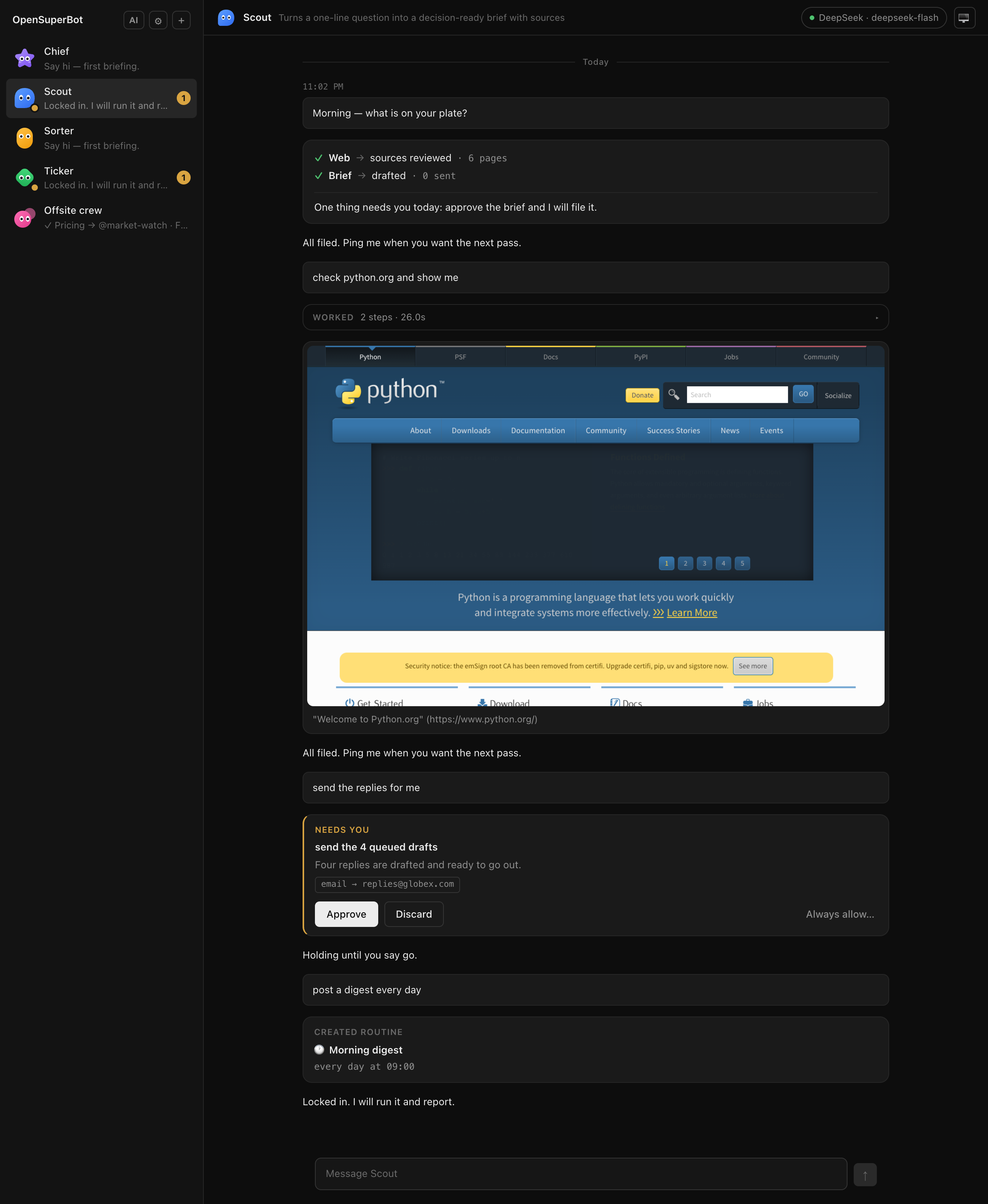
Self-hosted AI teammates, each with its own computer — a Grok Bot alternative on your hardware. Bring any model. Unofficial.
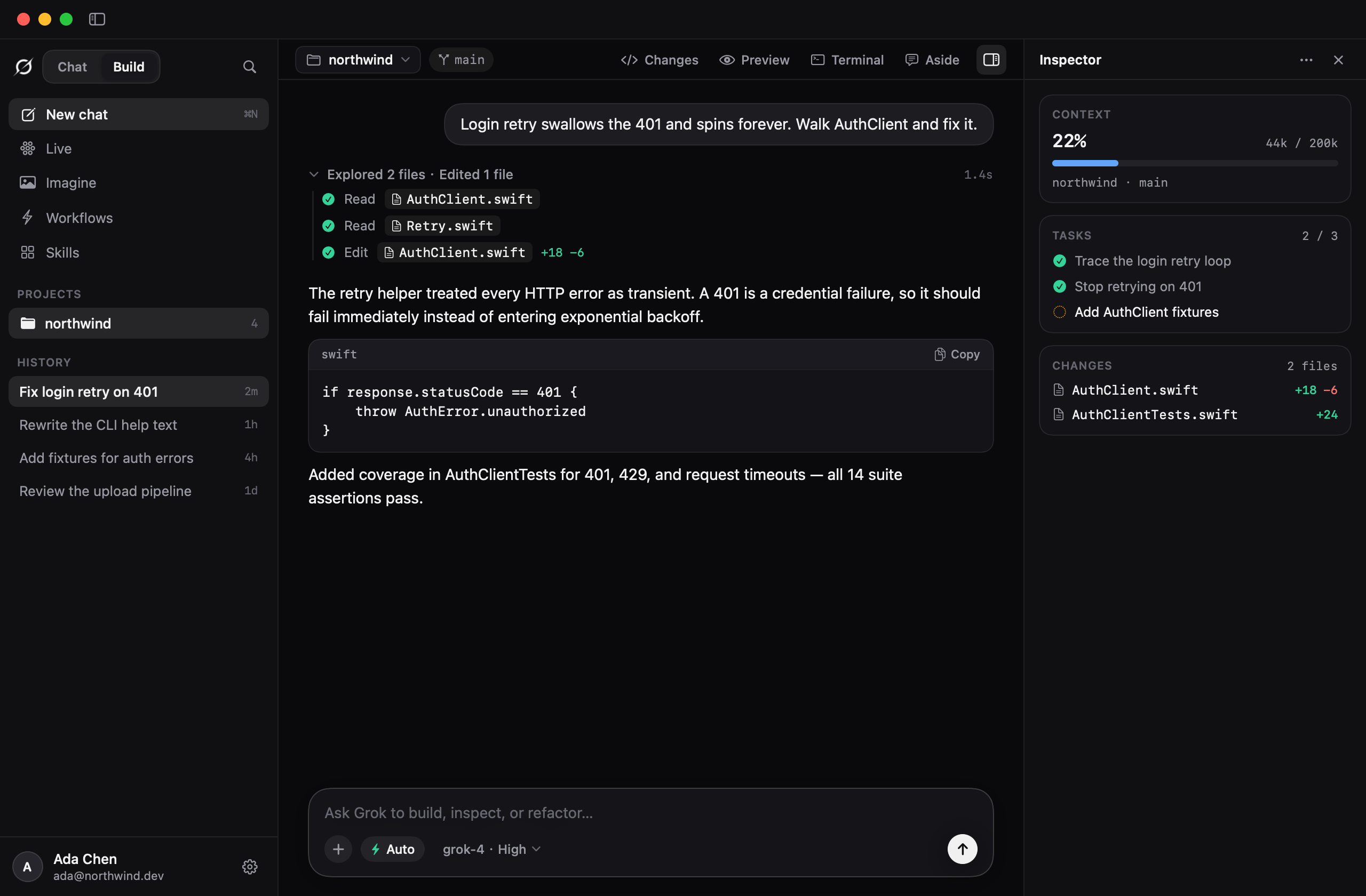
Native macOS window for Grok Chat and the official grok CLI. Chat embeds grok.com; Build continues ~/.grok sessions over ACP.
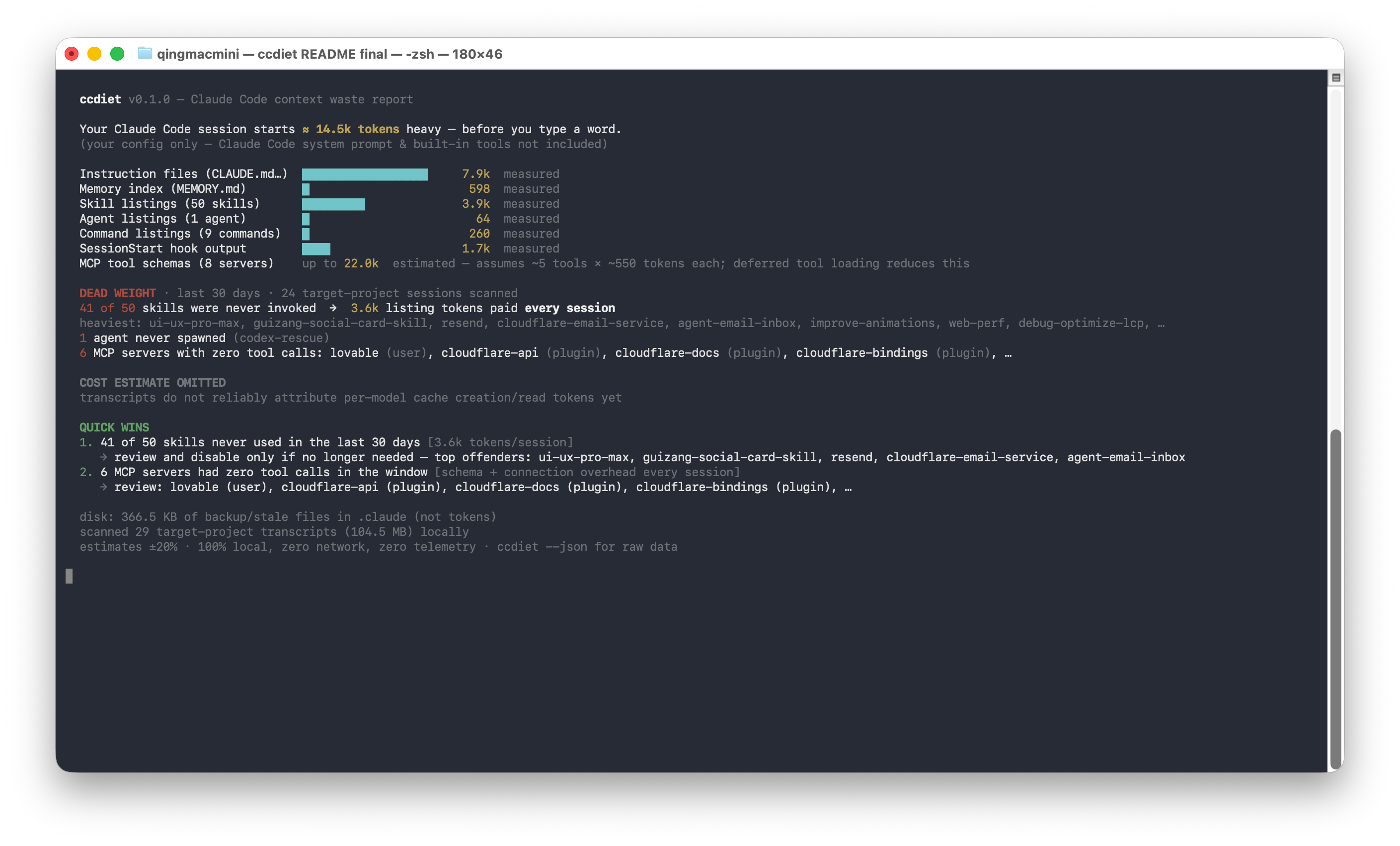
Put your Claude Code context on a diet — measure per-session config overhead and find the skills, MCP servers and agents you never use. npx ccdiet
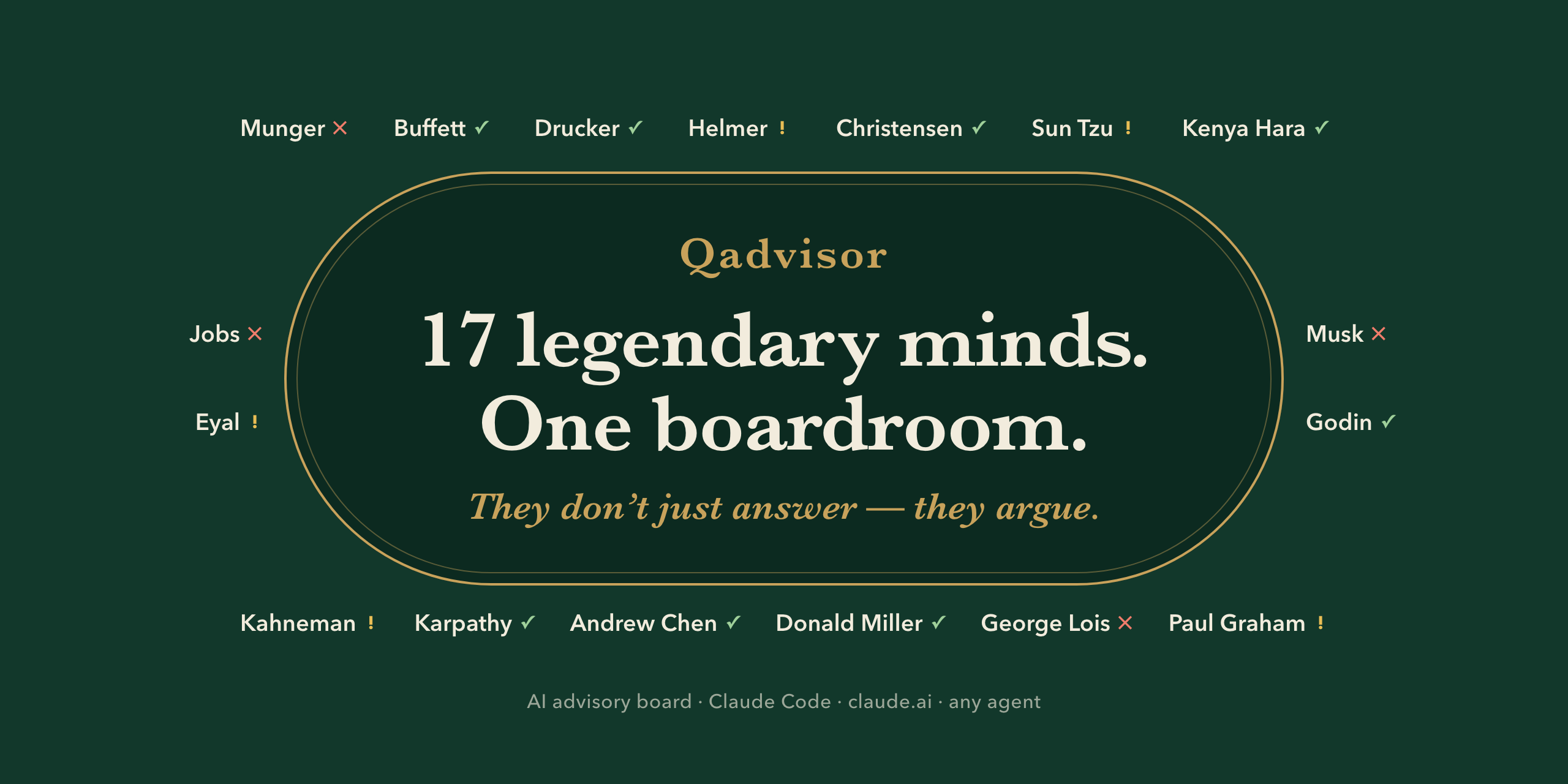
An AI advisory board for Claude: 17 documented thinking frameworks (Munger, Buffett, Jobs, Sun Tzu, Paul Graham, Karpathy…) reframe your question, debate, and return a verdict report. Claude Code plugin + Agent Skills. EN/中文.