coursera-ml-py
Python programming assignments for Machine Learning by Prof. Andrew Ng in Coursera
- 1.4k
- Python
- MIT
- 6 y ago
Python programming assignments for Machine Learning by Prof. Andrew Ng in Coursera
Decision Trees, Random Forest, Dynamic Time Warping, Naive Bayes, KNN, Linear Regression, Logistic Regression, Mixture Of Gaussian, Neural Network, PCA, SVD, Gaussian Naive Bayes, Fitting Data to Gaussian, K-Means
Estudo e implementação dos principais algoritmos de Machine Learning em Jupyter Notebooks.
Implementation of random Fourier features for kernel method, like support vector machine and Gaussian process model
Machine learning is widely used in bioinformatics and particularly in breast cancer diagnosis. In this project, certain classification methods such as K-nearest neighbors (K-NN) and Support Vector Machine (SVM) which is a supervised learning method to detect breast cancer are used.
A sparsity aware implementation of "Alternating Direction Method of Multipliers for Non-Negative Matrix Factorization with the Beta-Divergence" (ICASSP 2014).
A Julia package for advanced Matrix Diagonalization algorithms (PCA, Whitening, MCA, gMCA, CCA, gCCA, CSP, CSTP, AJD, mAJD)
An Interactive Approach to Understanding Unsupervised Learning Algorithms
All codes, both created and optimized for best results from the SuperDataScience Course
Programming assignments and quizzes completed as part of the course Mathematics for Machine Learning Specialization by Imperial College London on Coursera.
Implementing PCA from Scratch for iris dataset
A system to recognize hand gestures by applying feature extraction, feature selection (PCA) and classification (SVM, decision tree, Neural Network) on the raw data captured by the sensors while performing the gestures.
Mathematics for Machine Learning Specialization
Principal Component Regression - Clearly Explained and Implemented
A Julia package for exponential family principal component analysis (EPCA).
Case Study in ranking U.S. cities based on a single linear combination of rating variables. Dimensionality techniques used in the analysis are Principal Component Analysis (PCA), Factor Analysis (FA), Canonical Correlation Analysis (CCA)
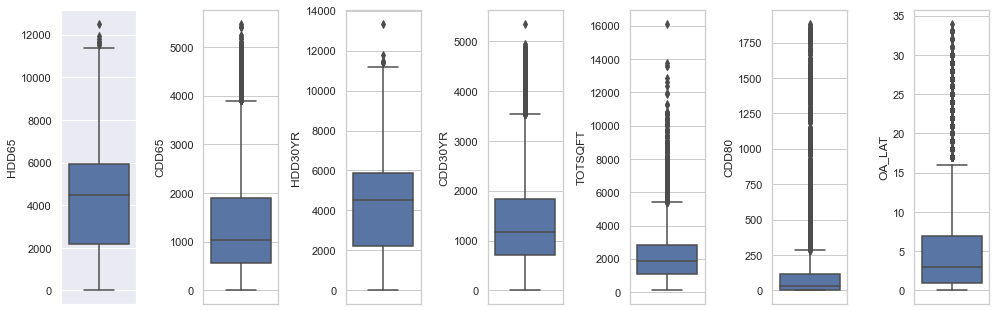
Predicting the Residential Energy Usage across 113.6 million U.S. households using Machine Learning Algorithms (Regression and Ensemble)
Dimensionality Reduction technique in machine learning both theory and code in Python. Includes topics from PCA, LDA, Kernel PCA, Factor Analysis and t-SNE algorithm
Machine Learning algorithms implementation using Python
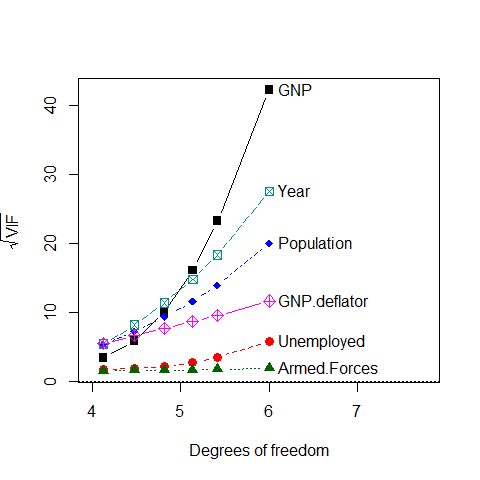
A simple example to show how Principal Component Analysis can be used to Address Multicollinearity
This repository contains data visualization programs on various datasets done using python.
A demonstration of how to use PCA to see if data is linear or not
Unsupervised Learning (PCA) on Vehicle dataset
Machine Learning from Stanford University (Andrew Ng) - Assignments and Lectures
Analysis of global poverty using PCA to identify important parameters and then clustering via both K-means and Hierarchical clustering techniques.