rdedup
Data deduplication engine, supporting optional compression and public key encryption.
- 858
- Rust
- 4 y ago

Official Repository of "LLM × DATA" Survey Paper
Repo OpenDataBox/awesome-data-llm, read from GitHub 1 min ago. OpenDataBox has not joined Take My Repo.
OpenDataBox/awesome-data-llm is a public repo on GitHub by OpenDataBox. Official Repository of "LLM × DATA" Survey Paper. It declares no license on GitHub. Public does not mean open source: without a license, nobody is granted the right to reuse it. It has 839 stars and last changed on 2026-10-25. Nobody has reviewed it on Take My Repo yet, which says nothing about its quality. Read from GitHub on 2026-11-25.
A collection of papers and projects related to LLMs and corresponding data-centric methods.
Other publicly-available materials: [Slides]
If you find our survey useful, please cite the paper:
@article{LLMDATASurvey,
    title={A Survey of LLM × DATA},
    author={Xuanhe Zhou and Junxuan He and Wei Zhou and Haodong Chen and Zirui Tang and Haoyu Zhao and Xin Tong and Guoliang Li and Youmin Chen and Jun Zhou and Zhaojun Sun and Binyuan Hui and Shuo Wang and Conghui He and Zhiyuan Liu and Jingren Zhou and Fan Wu},
    year={2025},
    journal={arXiv preprint arXiv:2505.18458},
    url={https://arxiv.org/abs/2505.18458}
}
@article{tangllmasanalyst,
    title={LLM/Agent-as-Data-Analyst: A Survey},
    author={Zirui Tang and Weizheng Wang and Zihang Zhou and Yang Jiao and Bangrui Xu and Boyu Niu and Xuanhe Zhou and Guoliang Li and Yeye He and Wei Zhou and Yitong Song and Cheng Tan and Bin Wang and Conghui He and Xiaoyang Wang and Fan Wu},
    year={2025},
    journal={arXiv preprint arXiv:2509.23988},
    url={https://arxiv.org/abs/2509.23988}
}
@article{zhoullmpreparationsurvey,
    title={Can LLMs Clean Up Your Mess? A Survey of Application-Ready Data Preparation with LLMs},
    author={Wei Zhou and Jun Zhou and Haoyu Wang and Zhenghao Li and Qikang He and Shaokun Han and Guoliang Li and Xuanhe Zhou and Yeye He and Chunwei Liu and Zirui Tang and Bin Wang and Shen Tang and Kai Zuo and Yuyu Luo and Zhenzhe Zheng and Conghui He and Jingren Zhou and Fan Wu},
    year={2026},
    journal={arXiv preprint arXiv:2601.17058},
    url={https://arxiv.org/abs/2601.17058}
}
The IaaS concept for LLM data (phonetically echoing Infrastructure as a Service) defines the characteristics of high-quality datasets along four key dimensions: (1) Inclusiveness ensures broad coverage across domains, tasks, sources, languages, styles, and modalities. (2) Abundance emphasizes sufficient and well-balanced data volume to support scaling, fine-tuning, and continual learning without overfitting. (3) Articulation requires clear, coherent, and instructive content with step-by-step reasoning to enhance model understanding and task performance. (4) Sanitization involves rigorous filtering to remove private, toxic, unethical, and misleading content, ensuring data safety, neutrality, and compliance.

We observe the evolution of LLM/Agent-as-Data-Analyst techniques follows a five-dimension trajectory: (1) Data Modality (homogeneous → heterogeneous); (2) Analysis Functionality (literal → semantic); (3) Knowledge Scope (closed-world →open-world); (4) Tool Integration (tool-coupled → tool-assisted); (5) Development Autonomy (manual → fully autonomous).

We present a systematic survey of LLM-enhanced data preparation, an emerging paradigm driven by growing demands for application-ready data, advances in large language models, and agent-oriented data infrastructures.

CommonCrawl: A massive web crawl dataset covering diverse languages and domains; widely used for LLM pretraining. [Source]
The Stack: A large-scale dataset of permissively licensed source code in multiple programming languages; used for code LLMs. [HuggingFace]
RedPajama: A replication of LLaMA’s training data recipe with open datasets; spans web, books, arXiv, and more. [Github]
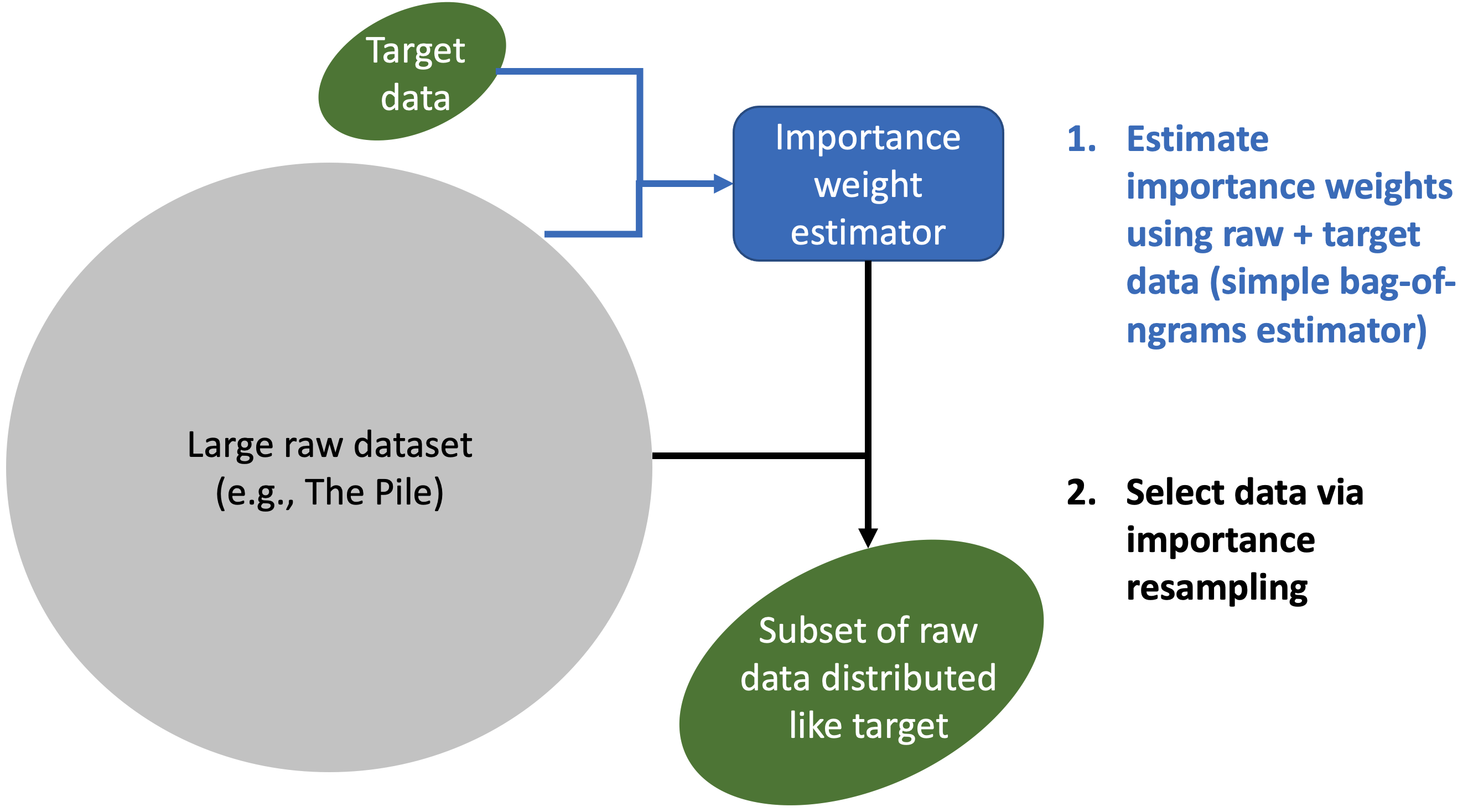
SlimPajama-627B-DC: A deduplicated and filtered subset of RedPajama (627B tokens); optimized for clean and efficient training. [HuggingFace]
Alpaca-CoT: Instruction-following dataset enhanced with Chain-of-Thought (CoT) reasoning prompts; used for dialogue fine-tuning. [Github]
LLaVA-Pretrain: A multimodal dataset with image-text pairs for training visual language models like LLaVA. [HuggingFace]
Wikipedia: Structured and encyclopedic content; a foundational source for general-purpose language models. [HuggingFace]
C4: A cleaned version of CommonCrawl data, widely used in models like T5 for high-quality web text. [HuggingFace]
BookCorpus: Contains free fiction books; often used to teach models long-form language understanding. [HuggingFace]
Arxiv: Scientific paper corpus from arXiv, covering physics, math, CS, and more; useful for academic language modeling. [HuggingFace]
PubMed: Biomedical literature dataset from the PubMed database; key resource for medical domain models. [Source]
StackExchange: Community Q&A data covering domains like programming, math, philosophy, etc.; useful for QA and dialogue tasks. [Source]
OpenWebText2: A high-quality open-source web text dataset based on URLs commonly cited on Reddit; GPT-style training corpus. [Source]
OpenWebMath: A dataset of math questions and answers; designed to improve mathematical reasoning in LLMs. [HuggingFace]
Falcon-RefinedWeb: Filtered web data used in training Falcon models; emphasizes data quality through rigorous preprocessing. [HuggingFace]
CCI 3.0: A large-scale multi-domain Chinese web corpus, suitable for training high-quality Chinese LLMs. [HuggingFace]
OmniCorpus: A unified multimodal dataset (text, image, audio) designed for general-purpose AI training. [Github]
WanJuan3.0: A diverse and large-scale Chinese dataset including news, fiction, QA, and more; released by OpenDataLab. [Source]
OpenDataBox/awesome-data-llm is a public repo on GitHub by OpenDataBox. Official Repository of "LLM × DATA" Survey Paper.
It declares no license on GitHub. Public does not mean open source: without a license, nobody is granted the right to reuse it.
Its maker has not tagged a system, so it is unknown here. Its README says what it needs.
The agent harness performance optimization system. Skills, instincts, memory, security, and research-first development for Claude Code, Codex, Opencode, Cursor and beyond.
Open-source Rust coding agent for terminal, web, and desktop. Any model, multi-agent fleets, MCP & plugins, OS sandboxing, and session receipts.
Open "Take it" on its page: Take My Repo writes an install plan for your machine and hands it to your AI agent (Claude Code, Codex or Cursor), which asks you before each step. Take My Repo has not tested it on any machine.
Its last change on GitHub was on 2026-10-25. GitHub counts 0 open issues and pull requests. Take My Repo does not judge from that whether it is maintained.
Nobody has reviewed it on Take My Repo yet, which says nothing about its quality.
Take My Repo cannot say: it does not audit code and has not run awesome-data-llm. What is known comes from GitHub. It declares no license on GitHub. Public does not mean open source: without a license, nobody is granted the right to reuse it. Its last change was on 2026-10-25. It has 839 stars, which measure popularity, not safety. Nobody has reviewed it on Take My Repo yet, which says nothing about its quality. Read the source before you run it. With "Take it", your AI agent shows each step and asks you before running it; README text is treated as data, not as instructions.