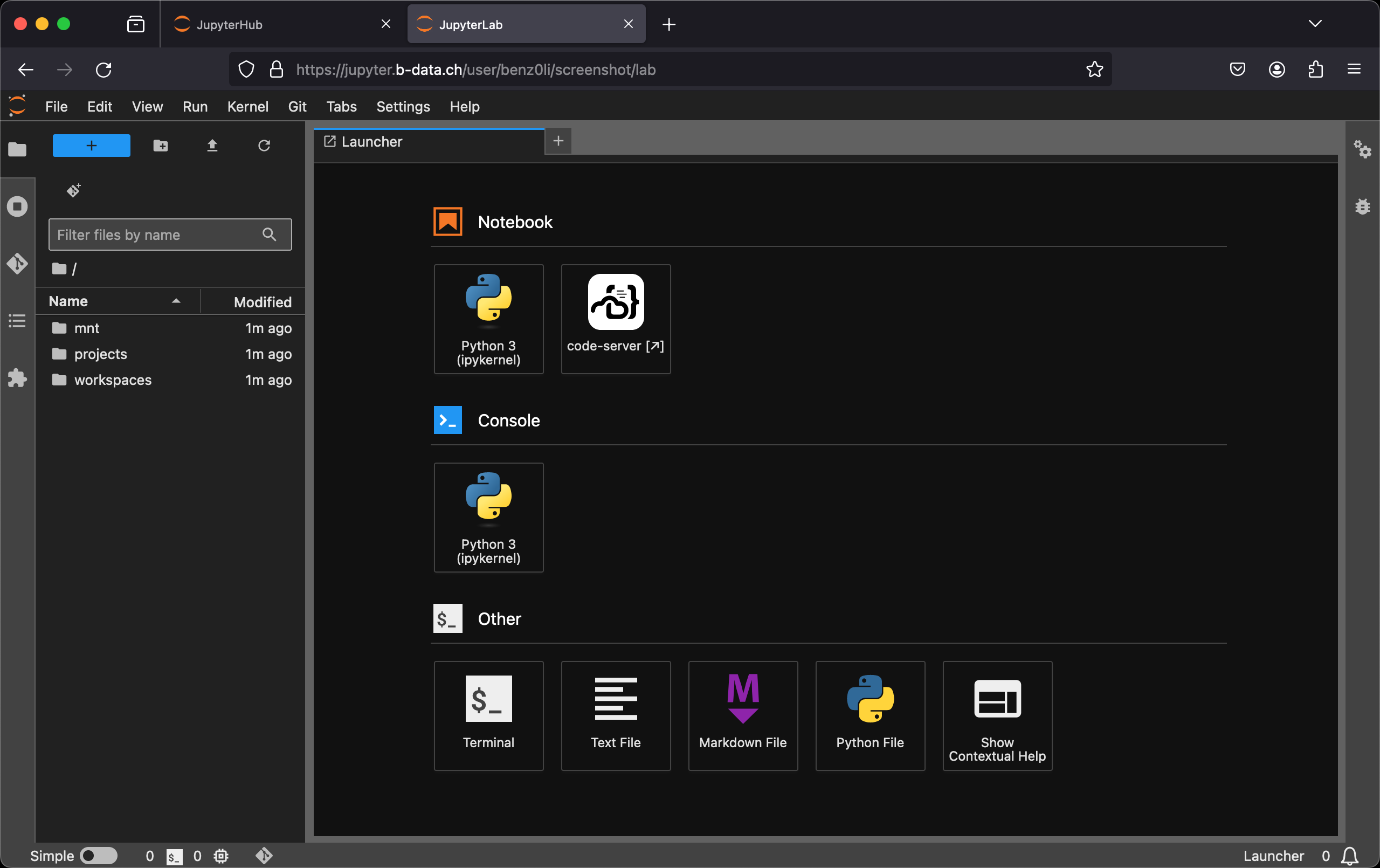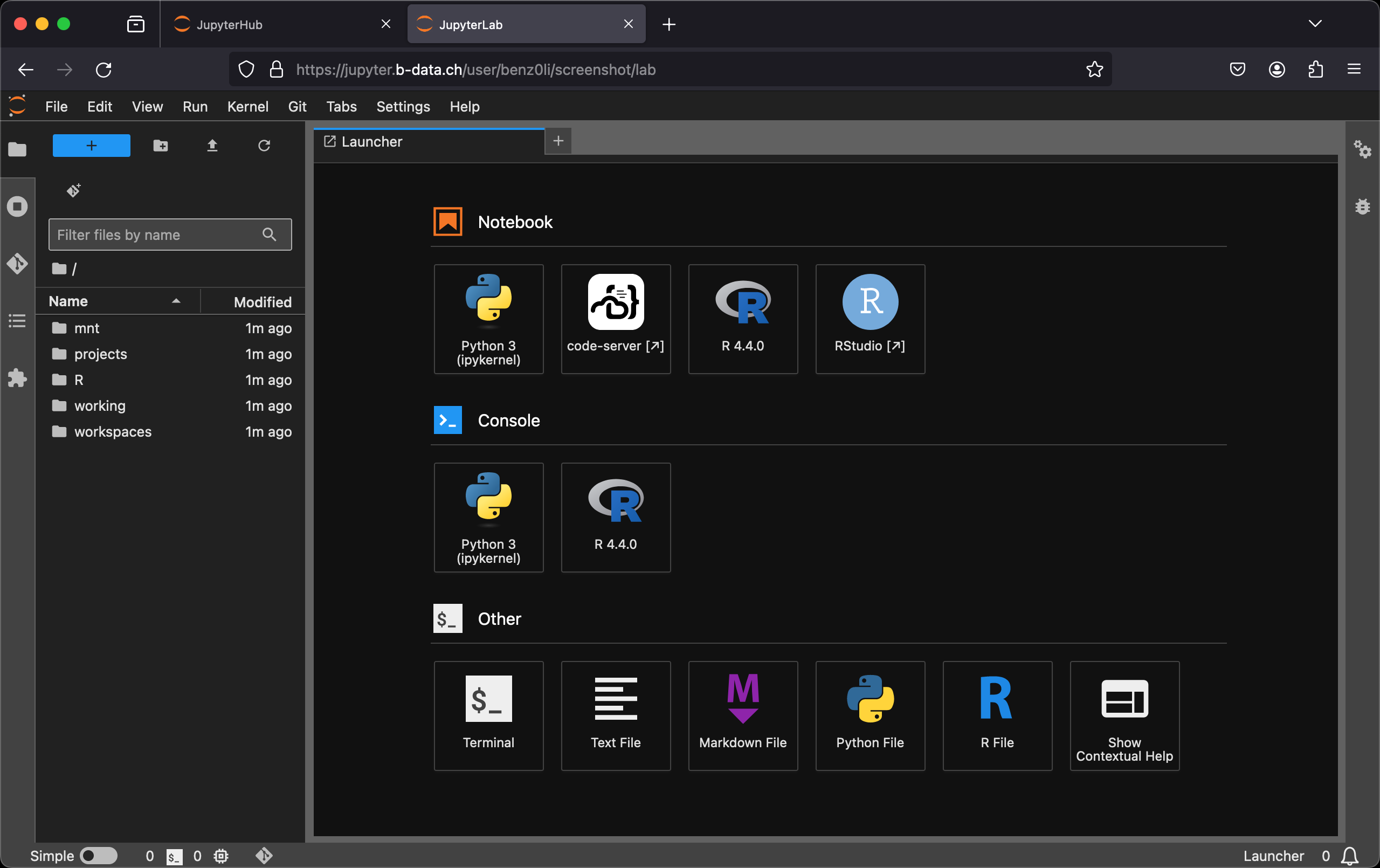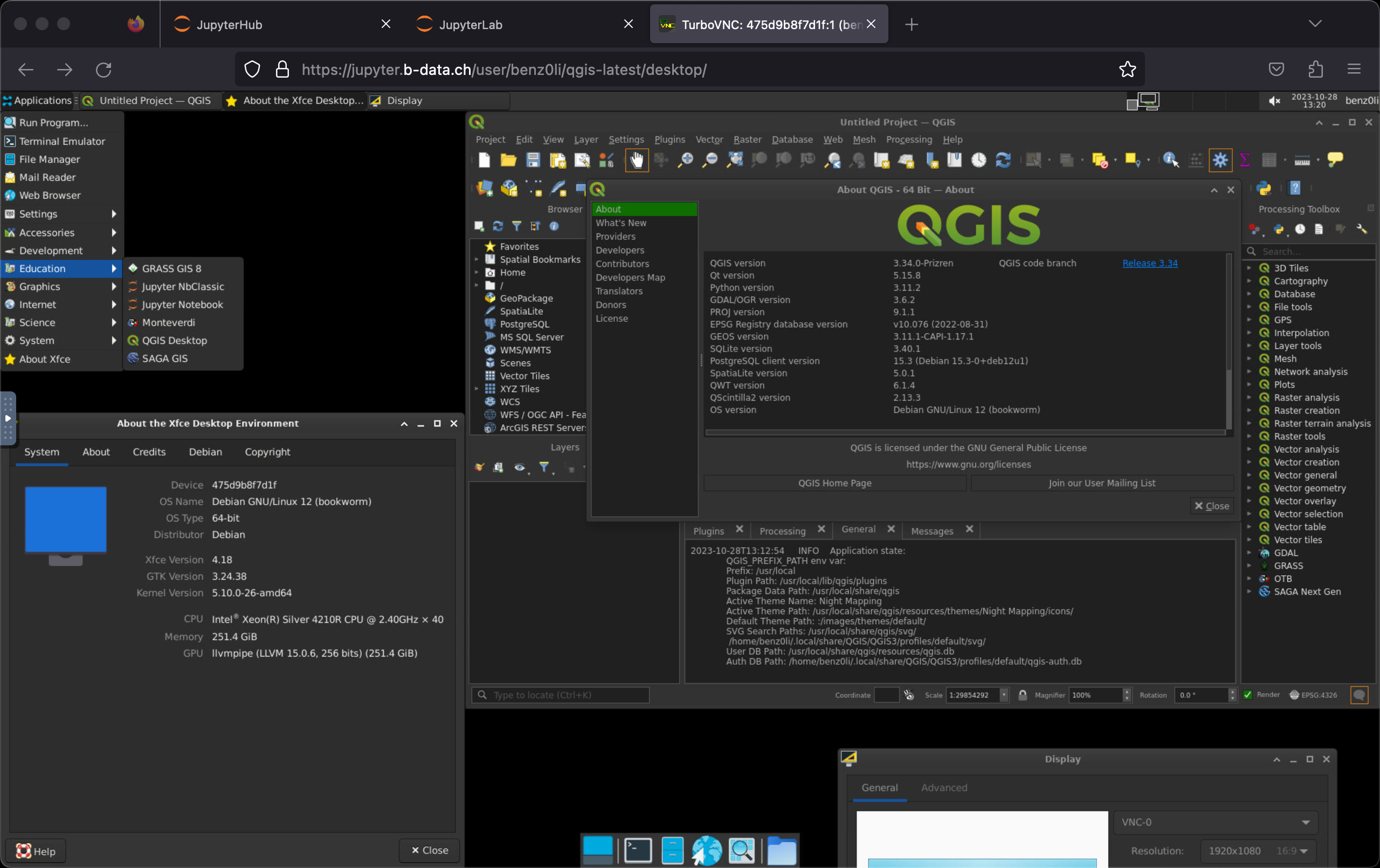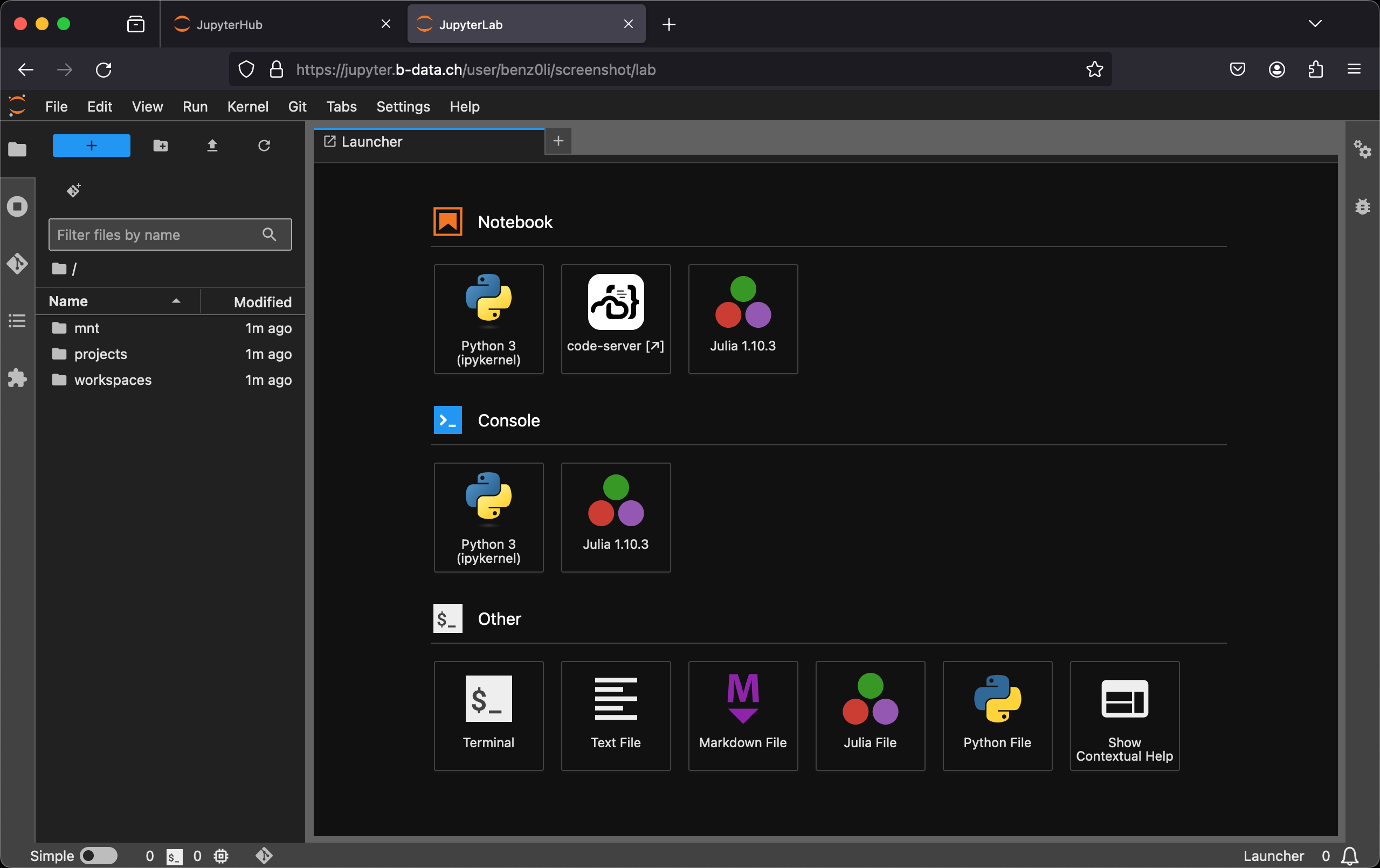

data-science-devcontainers
(GPU accelerated) Multi-arch (linux/amd64, linux/arm64/v8) Data Science dev containers for R, Python, Julia and MAX/Mojo
- 41
- 9 d ago
Repo b-data/data-science-devcontainers, read from GitHub 1 min ago. b-data has not joined Take My Repo.
In short
b-data/data-science-devcontainers is a public repo on GitHub by b-data. (GPU accelerated) Multi-arch (linux/amd64, linux/arm64/v8) Data Science dev containers for R, Python, Julia and MAX/Mojo. It declares no license on GitHub. Public does not mean open source: without a license, nobody is granted the right to reuse it. It is written mainly in Dockerfile, has 41 stars and last changed on 2026-11-13. Nobody has reviewed it on Take My Repo yet, which says nothing about its quality. Read from GitHub on 2026-11-22.
(CUDA-based) Data Science dev containers
(GPU accelerated) Multi-arch (linux/amd64, linux/arm64/v8) Data Science
dev containers:
- (CUDA) Julia base, pubtools
- MAX/Mojo base, scipy
- CUDA MAX base, scipy
- (CUDA) Python base, scipy
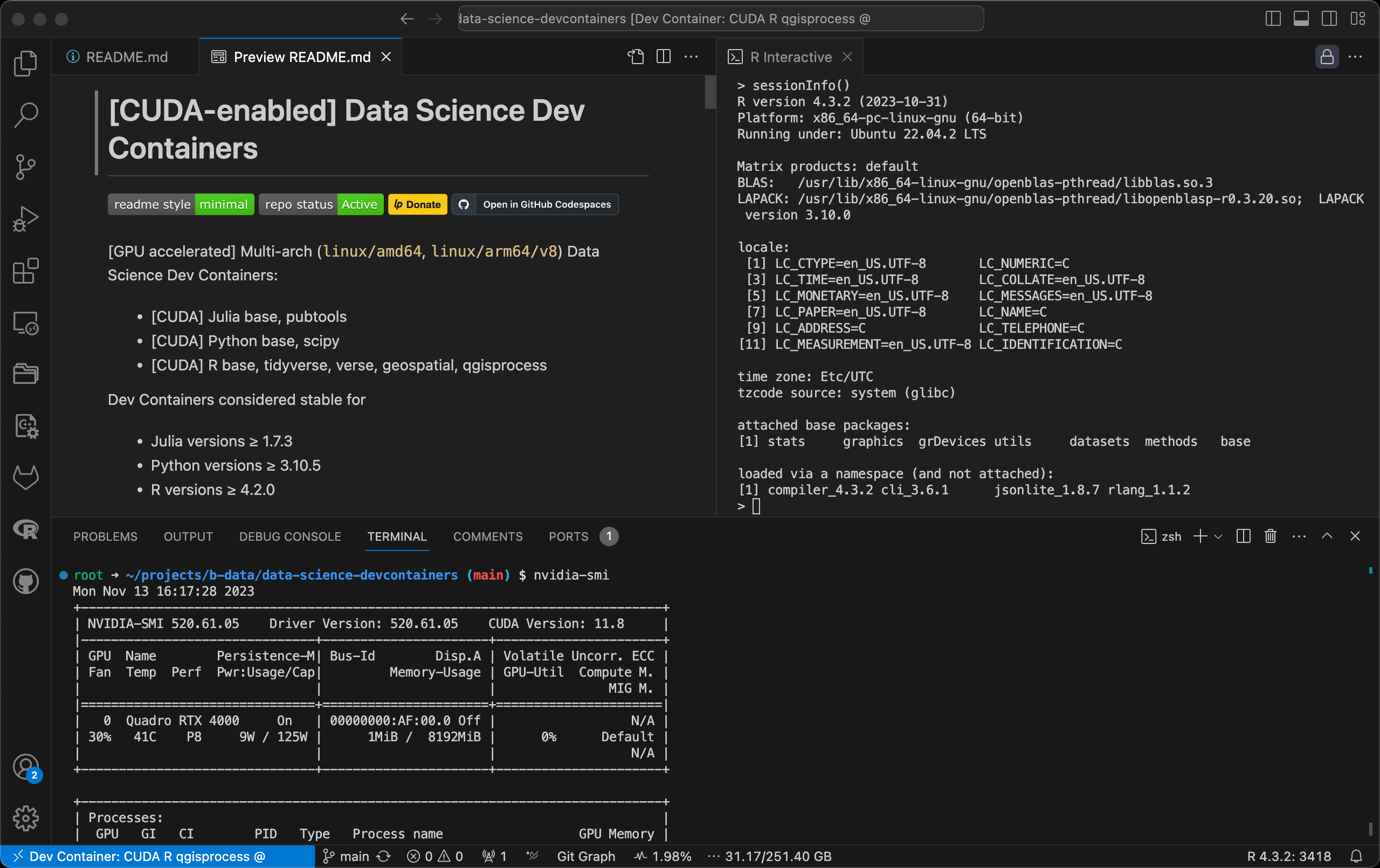
- (CUDA) R base, tidyverse, verse, geospatial, qgisprocess
Dev containers considered stable for
- Julia versions ≥ 1.7.3
- Mojo versions ≥ 24.3.0
- MAX versions ≥ 24.5.0
- Python versions ≥ 3.10.5
- R versions ≥ 4.2.0

Parent images
- (CUDA-based) Julia docker stack
- (CUDA-based) MAX/Mojo docker stack
- (CUDA-based) Python docker stack
- (CUDA-based) R docker stack
Extended to match the (CUDA-based) JupyterLab docker stacks, except that
- GPU accelerated dev containers are based on the
NVIDIA CUDA runtime flavoured
image.
- The JupyterLab docker stacks are based on the NVIDIA CUDA devel flavoured image.
- Dev containers' Oh My Zsh uses the devcontainers theme + default font.
- The JupyterLab docker stacks' Oh My Zsh uses Powerlevel10k theme + MesloLGS NF font.
Features
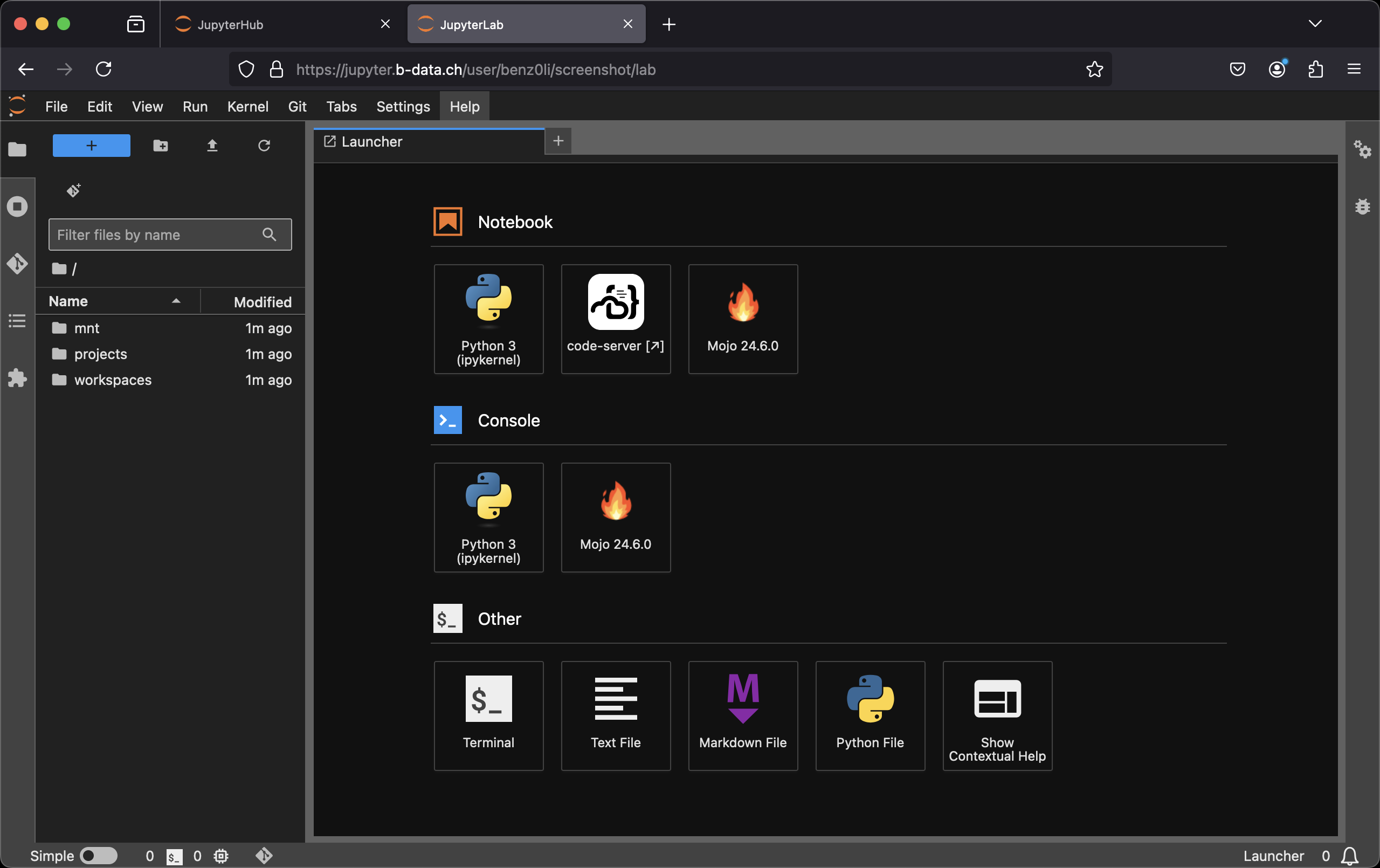
- JupyterLab: A web-based interactive development environment for Jupyter notebooks, code, and data.
- Git: A distributed version-control system for tracking changes in source code.
- Git LFS: A Git extension for versioning large files.
- GRASS GIS: A free and open source Geographic Information System (GIS).
ℹ️ (CUDA) R qgisprocess image - Orfeo Toolbox: An open-source project for state-of-the-art remote
sensing.
ℹ️ (CUDA) R qgisprocess image (amd64 only) - Julia1: A high-level, high-performance dynamic language for technical computing.
- MAX1: A high-performance generative AI framework.
- Mojo1: A programming language for AI developers.
- Pandoc: A universal markup converter.
- Python: An interpreted, object-oriented, high-level programming language with dynamic semantics.
- QGIS: A free, open source, cross platform (lin/win/mac) geographical
information system (GIS).
ℹ️ (CUDA) R qgisprocess image - Quarto: A scientific and technical publishing system built on Pandoc.
ℹ️ Julia pubtools, MAX/Mojo/Python scipy, R verse+ images - R1: A language and environment for statistical computing and graphics.
- arf: An alternative R frontend — a modern R console written in Rust.
- SAGA GIS: A Geographic Information System (GIS) software with immense
capabilities for geodata processing and analysis.
ℹ️ (CUDA) R qgisprocess image - TinyTeX: A lightweight, cross-platform, portable, and easy-to-maintain
LaTeX distribution based on TeX Live.
ℹ️ Julia pubtools, MAX/Mojo/Python scipy, R verse+ images - Zsh: A shell designed for interactive use, although it is also a powerful scripting language.
👉 See the Version Matrices for detailed information:
- Julia: Version Matrix, CUDA Version Matrix
- MAX/Mojo: Version Matrix, CUDA Version Matrix
- Python: Version Matrix, CUDA Version Matrix
- R: Version Matrix, CUDA Version Matrix
Pre-installed extensions
- .gitignore Generator
- Black Formatter
- Container Tools
- EditorConfig for VS Code
- ESLint
- Git Graph
- GitHub Pull Requests and Issues
- GitLab Workflow
- GitLens — Git supercharged
ℹ️ Pinned to version 11.7.0 due to unsolicited AI content - Excel Viewer
- hadolint
- Julia1
- Jupyter
- LaTeX Workshop
ℹ️ Julia pubtools, MAX/Mojo/Python scipy, R verse+ images - markdownlint
- Mojo 🔥1
- Path Intellisense
- Prettier - Code formatter
- Project Manager
- Python
- Quarto
ℹ️ Julia pubtools, MAX/Mojo/Python scipy, R verse+ images - R1
- Resource Monitor
- ShellCheck
- YAML
Table of Contents
Prerequisites
Dev containers require either Docker or Podman2 to be installed. CUDA-based versions require the following in addition:
- NVIDIA GPU
- NVIDIA Linux driver
- NVIDIA Container Toolkit
ℹ️ The host running the GPU accelerated dev containers only requires the NVIDIA driver, the CUDA toolkit does not have to be installed.
Use driver version 580 (Long Term Support Branch) with NVIDIA Data Center GPUs or select NGC-Ready NVIDIA RTX boards to ensure forward compatibility until June 2028.
Install
Codespaces require no installation, but do not currently offer machines with NVIDIA GPUs.
Docker
To install Docker, follow the instructions for your platform:
- Install Docker Engine | Docker Documentation > Supported platforms
- Post-installation steps for Linux
Podman
To install Podman, follow the instructions for your platform:
CUDA
To install the NVIDIA Container Toolkit, follow the instructions for your platform:
Usage
The default dev container is meant to work on this repository.
Every other configuration is a custom Data Science dev container that behaves in a unique way:
- Default mount3:
- source: empty directory
- target:
/home/vscode - type: volume
- Codespace only mount:
- source: root of this repository
- target:
/workspaces - type: misc
- Default path:
/home/vscode - Default user4:
vscode- uid: 1000 (auto-assigned)
- gid: 1000 (auto-assigned)
- Lifecycle scripts:
onCreateCommand: home directory setuppostStartCommandspostAttachCommand: Codespace only: Check for dev container updates
To disable the postStartCommand or postAttachCommand, comment out line 8 in
~/.local/bin/dockerSystemPrune.sh or ~/.local/bin/checkForUpdates.sh.
Codespace
- Click the
<> Codebutton, then click the Codespaces tab.
A message is displayed at the bottom of the dialog telling you who will pay for the codespace. - Create your codespace after configuring advanced options:
- Configure advanced options
To configure advanced options for your codespace, such as a different machine type or a particulardevcontainer.jsonfile:- At the top right of the Codespaces tab, select
...and click New with options.... - On the options page for your codespace, choose your preferred options from the dropdown menus.
- Click Create codespace.
- At the top right of the Codespaces tab, select
- Configure advanced options
– Creating a codespace for a repository - GitHub Docs
To open your codespace in JupyterLab:
-
Execute
jupyter-lab \ --ServerApp.allow_origin='*' \ --ServerApp.cookie_options="{'Same Site': 'None', 'Secure': True}" \ --ServerApp.tornado_settings="{'headers':{'Content-Security-Policy':\"frame-ancestors 'self' https://*.github.dev\", 'Access-Control-Allow-Headers': 'accept, content-type, authorization, x-xsrftoken, x-github-token'}}" \ --notebook-dir=/home/vscode \ --no-browser -
Ctrl+click on one of the URLs shown in the Terminal.
ℹ️ Opening your codespace in JupyterLab according to the
GitHub Docs
sets the default path to /workspaces/<repository-name> that you can not
escape.
Local/'Remote SSH'
Use the Dev Containers: Reopen in Container command from the Command Palette
(F1, ⇧⌘P (Windows, Linux Ctrl+Shift+P))
To start JupyterLab:
-
Execute
jupyter-lab -
Ctrl+clickon one of the URLs shown in the Terminal.
Persistence
Data in the following locations is persisted:
- The user's home directory (
/home/vscode)5 - The dev container's workspace (
/workspaces)
This is accomplished either via a volume or bind mount (or loop device on Codespaces) and is preconfigured.
| Codespaces: A 'Full Rebuild Container' resets the home directory! ℹ️ This is never necessary unless you want exactly that. |
|---|
Similar project
What makes this project different:
- Multi-arch:
linux/amd64,linux/arm64/v8
ℹ️ Runs on Apple M series using Docker Desktop. - Base image: Debian instead of
Ubuntu
ℹ️ CUDA-based images use Ubuntu. - IDE: JupyterLab next to VS Code
- Just Python – no Conda / Mamba
CUDA-based images:
- Derived from
nvidia/cuda:13.5.0-runtime-ubuntu26.04
See Notes and CUDA Notes for tweaks, settings, etc.
Contributing
PRs accepted.
This project follows the Contributor Covenant Code of Conduct.
Support
Community support: Open a new discussion here.
Commercial support: Contact b-data by email.
License
Copyright © 2023 b-data GmbH
Distributed under the terms of the MIT License.
Footnotes
Questions
What is data-science-devcontainers?
b-data/data-science-devcontainers is a public repo on GitHub by b-data. (GPU accelerated) Multi-arch (linux/amd64, linux/arm64/v8) Data Science dev containers for R, Python, Julia and MAX/Mojo.
Is data-science-devcontainers open source?
It declares no license on GitHub. Public does not mean open source: without a license, nobody is granted the right to reuse it.
Does data-science-devcontainers run on macOS, Windows or Linux?
Its maker tagged it for macOS, Windows and Linux, or as Docker or cross-platform. That is declared by the maker; Take My Repo has not tested it.
How do I install data-science-devcontainers?
Open "Take it" on its page: Take My Repo writes an install plan for your machine and hands it to your AI agent (Claude Code, Codex or Cursor), which asks you before each step. Take My Repo has not tested it on any machine.