benchmark_VAE
Unifying Variational Autoencoder (VAE) implementations in Pytorch (NeurIPS 2022)
- 2k
- Python
- Apache-2.0
- 2 y ago
This repo implements VQVAE on mnist and as well as colored version of mnist images. It also implements simple LSTM for generating sample numbers using the encoder outputs of trained VQVAE
Repo explainingai-code/VQVAE-Pytorch, read from GitHub 1 d ago. explainingai-code has not joined Take My Repo.
explainingai-code/VQVAE-Pytorch is a public repo on GitHub by explainingai-code. This repo implements VQVAE on mnist and as well as colored version of mnist images. It also implements simple LSTM for generating sample numbers using the encoder outputs of trained VQVAE. It declares no license on GitHub. Public does not mean open source: without a license, nobody is granted the right to reuse it. It is written mainly in Python, has 62 stars and last changed on 2024-02-06. Nobody has reviewed it on Take My Repo yet, which says nothing about its quality. Read from GitHub on 2026-11-21.
This repository implements VQVAE for mnist and colored version of mnist and follows up with a simple LSTM for generating numbers.
git clone https://github.com/explainingai-code/VQVAE-Pytorch.gitcd VQVAE-Pytorchpip install -r requirements.txtpython run_simple_vqvae.pypython -m tools.train_vqvae for training vqvaepython -m tools.infer_vqvae for generating reconstructions and encoder outputs for LSTM trainingpython -m tools.train_lstm for training minimal LSTM python -m tools.generate_images for using the trained LSTM to generate some numbersconfig/vqvae_mnist.yaml - VQVAE for training on black and white mnist imagesconfig/vqvae_colored_mnist.yaml - VQVAE with more embedding vectors for training colored mnist imagesFor setting up the dataset: Follow - https://github.com/explainingai-code/Pytorch-VAE#data-preparation
Verify the data directory has the following structure:
VQVAE-Pytorch/data/train/images/{0/1/.../9}
	*.png
VQVAE-Pytorch/data/test/images/{0/1/.../9}
	*.png
Outputs will be saved according to the configuration present in yaml files.
For every run a folder of task_name key in config will be created and output_train_dir will be created inside it.
During training of VQVAE the following output will be saved
task_name directoryDuring inference the following output will be saved
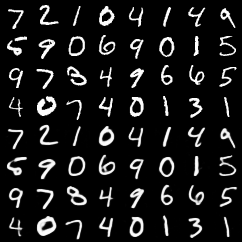
task_name/output_train_dir/reconstruction.png task_name/output_train_dir/mnist_encodings.pkltask_name/output_train_dir/generation_results.pngRunning run_simple_vqvae should be very quick (as its very simple model) and give you below reconstructions (input in black black background and reconstruction in white background)
Running default config VQVAE for mnist should give you below reconstructions for both versions
Sample Generation Output after just 10 epochs Training the vqvae and lstm longer and more parameters(codebook size, codebook dimension, channels , lstm hidden dimension e.t.c) will give better results
@misc{oord2018neural,
      title={Neural Discrete Representation Learning},
      author={Aaron van den Oord and Oriol Vinyals and Koray Kavukcuoglu},
      year={2018},
      eprint={1711.00937},
      archivePrefix={arXiv},
      primaryClass={cs.LG}
}
explainingai-code/VQVAE-Pytorch is a public repo on GitHub by explainingai-code. This repo implements VQVAE on mnist and as well as colored version of mnist images. It also implements simple LSTM for generating sample numbers using the encoder outputs of trained VQVAE.
It declares no license on GitHub. Public does not mean open source: without a license, nobody is granted the right to reuse it.
Its maker has not tagged a system, so it is unknown here. Its README says what it needs.
Open "Take it" on its page: Take My Repo writes an install plan for your machine and hands it to your AI agent (Claude Code, Codex or Cursor), which asks you before each step. Take My Repo has not tested it on any machine.
Its last change on GitHub was on 2024-02-06. GitHub counts 0 open issues and pull requests. Take My Repo does not judge from that whether it is maintained.
Unifying Variational Autoencoder (VAE) implementations in Pytorch (NeurIPS 2022)
Nobody has reviewed it on Take My Repo yet, which says nothing about its quality.
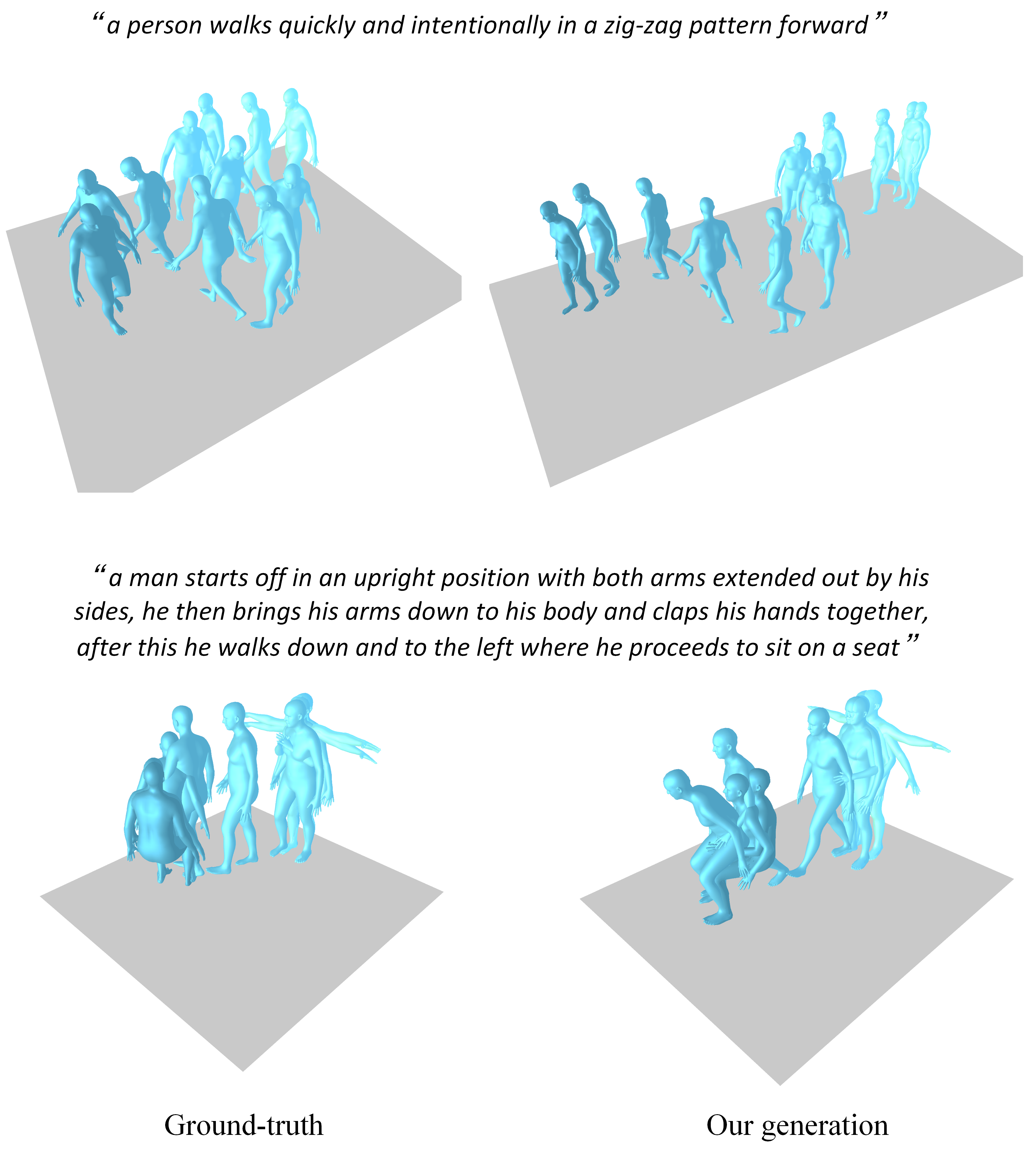
(CVPR 2023) Pytorch implementation of “T2M-GPT: Generating Human Motion from Textual Descriptions with Discrete Representations”
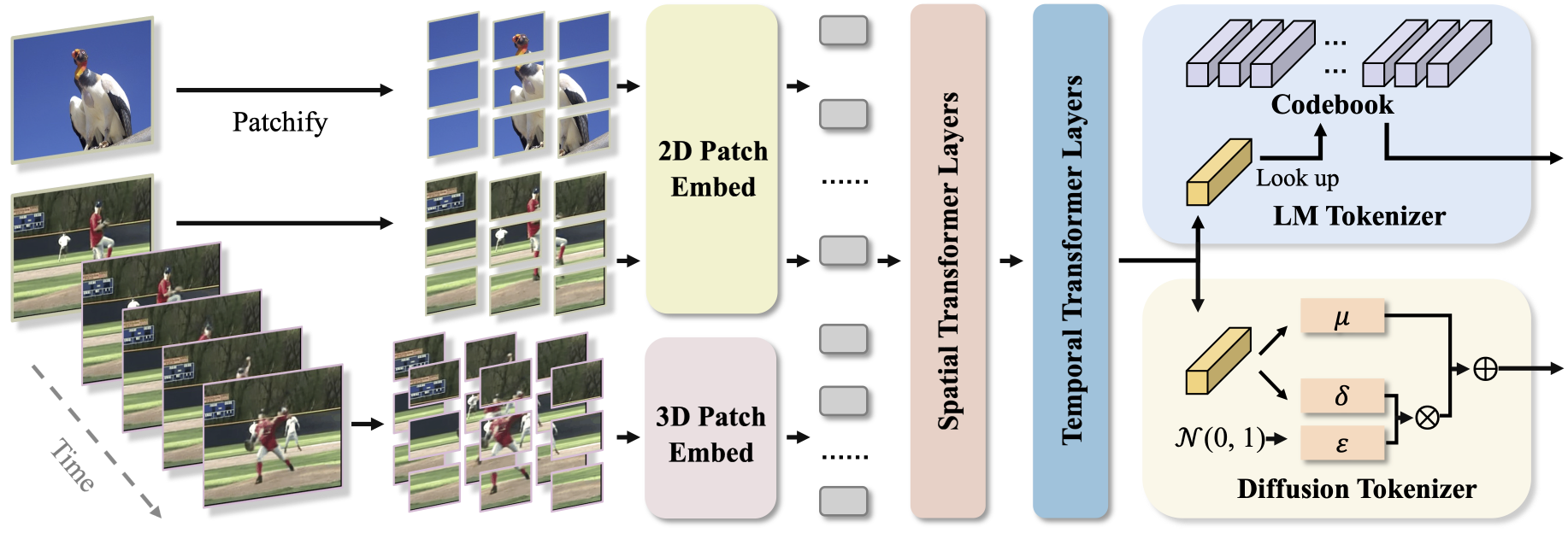
[NeurIPS 2024]OmniTokenizer: one model and one weight for image-video joint tokenization.
This repo implements a Stable Diffusion model in PyTorch with all the essential components.
This repo implements Denoising Diffusion Probabilistic Models (DDPM) in Pytorch
This repo implements Diffusion Transformers(DiT) in PyTorch and provides training and inference code on CelebHQ dataset
This repo implements simple Faster RCNN model in PyTorch with all the essential components.
This repository implements a simpleVAE for training on CPU on the MNIST dataset and provides ability to visualize the latent space, entire manifold as well as visualize how numbers interpolate between each other.
This repo implements ControlNet with DDPM and Latent Diffusion Model in PyTorch with canny edges as conditional control for Mnist and CelebHQ