tinygo
Go compiler for small places. Microcontrollers, WebAssembly (WASM/WASI), and command-line tools. Based on LLVM.
- 18k
- Go
- 31 min ago
Jo's Embedded Serial File System (for Standard Serial NOR-Flash)
Repo joembedded/JesFs, read from GitHub 8 h ago. joembedded has not joined Take My Repo.
joembedded/JesFs is a public repo on GitHub by joembedded. Jo's Embedded Serial File System (for Standard Serial NOR-Flash). It declares the MIT license on GitHub. It is written mainly in C, has 253 stars and last changed on 2026-07-04. Nobody has reviewed it on Take My Repo yet, which says nothing about its quality. Read from GitHub on 2026-11-22.

"I have detailed Files." - A literary nod to the T800 in Terminator II (Blockbuster, 1991).
Welcome to JesFs – a file system that's currently running on thousands of IoT devices worldwide, from mountain peaks to industrial floors, keeping data safe and devices smart since its first deployment!
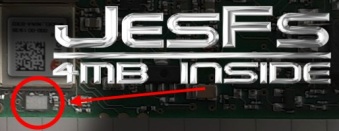
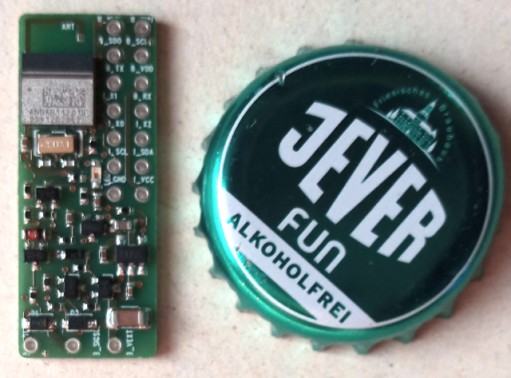
Yes, that's 4MB of file system power on a 2x3 mm chip!
Picture this: You're standing in 3000 meters altitude, -20°C, digging holes in the snow to access your IoT device. Not fun, right? That's exactly why JesFs was born.
My daily work is the IoT, and I needed a file system that could:
And I couldn't find one. So I built it.
JesFs is designed for "Small and Ultra-Low-Power IoT Devices" that need to communicate over many different channels (WiFi, Mobile Internet, Bluetooth, UART, Radio-Link, LoRa, Satellite, ...) and must work reliably for years.
fopen(), you know JesFs! (Note: But JesFs is not POSIX-compliant)JesFs is deliberately not POSIX-compliant. It is not meant to emulate a desktop or operating-system file system; it is a purpose-built embedded file system for real IoT devices, data loggers, bootloaders, mirrored cloud workflows, and very small targets.
This also allows JesFs to provide behavior that POSIX does not model well, such as unclosed files, power-loss-safe append-style logging, and application-level external synchronization. By avoiding a full POSIX abstraction, JesFs stays small, deterministic, easy to port, and suitable for systems where minimal code size and RAM usage matter more than generic OS compatibility.
[!IMPORTANT] Statement on AI Usage: The entire codebase was authored, manually entered, and thoroughly reviewed by qualified human engineers. However AI tools supported documentation and review processes. No AI-generated source code was directly copied or integrated.
# Built with SES (V6.22a) and SDK 17.1.0
# Set Macro $SDK_ROOT in SES -> Tools -> Options -> Building
# Example: "SDK_ROOT=C:/nordic/nRF5_SDK_17.1.0_ddde560"
// Core Functions
int16_t fs_start(uint8_t mode);                  // Initialize JesFs
int16_t fs_format(uint32_t f_id);                // Format the flash
void    fs_deepsleep(void);                      // Ultra-low power mode

// File Operations
int16_t fs_open(FS_DESC *pdesc, char* pname, uint8_t flags);
int32_t fs_read(FS_DESC *pdesc, uint8_t *pdest, uint32_t anz);
int16_t fs_write(FS_DESC *pdesc, uint8_t *pdata, uint32_t len);
int16_t fs_close(FS_DESC *pdesc);
int16_t fs_delete(FS_DESC *pdesc);
int16_t fs_rewind(FS_DESC *pdesc);
int16_t fs_rename(FS_DESC *pd_odesc, FS_DESC *pd_ndesc);

// File System Info
int16_t  fs_info(FS_STAT *pstat, uint16_t fno);
uint32_t fs_get_crc32(FS_DESC *pdesc);
int16_t  fs_check_disk(void cb_printf(char *fmt, ...), uint8_t *pline, uint32_t line_size);
void     fs_sec1970_to_date(uint32_t asecs, FS_DATE *pd);
Looks familiar? That's the point. 😁
NOR-Flash has a special characteristic: you can only write "0", never directly write "1". To set bits back to "1", you must erase entire sectors (typically 4KB blocks). This is why smart file systems are essential!
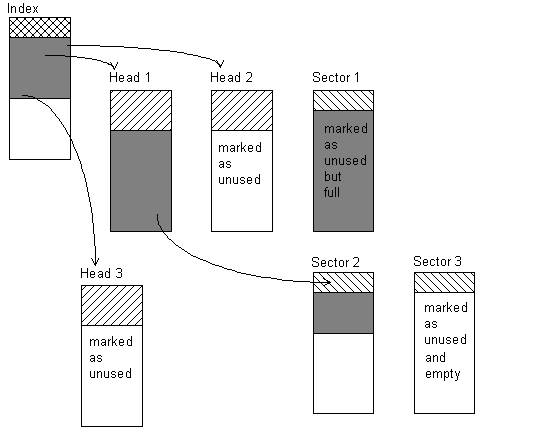
JesFs uses a 3-level sector architecture:
This is something you won't find in traditional file systems!
The Problem: Traditional systems must close files to update directory tables. If power fails during close → data corruption or loss!
JesFs Solution: Because empty flash is 0xFF, we can always find file ends without closing! Just avoid writing 0xFF bytes (use escape sequences or ASCII/Base64 encoding). Ideal for continuously growing files, like on a data logger.
Result: Power loss? No problem. Your data is safe.
Real-world measurements on nRF52840:
See Documentation/PerformanceTests.pdf for detailed benchmarks!
Ever wondered what went wrong when a device fails after years of reliable operation?
JesFs BlackBox creates an embedded flight recorder for your devices:
Read more: usecase_BlackBox/BlackBox_Eval.pdf
Think of your embedded devices updating themselves:
Change device behavior without recompiling:
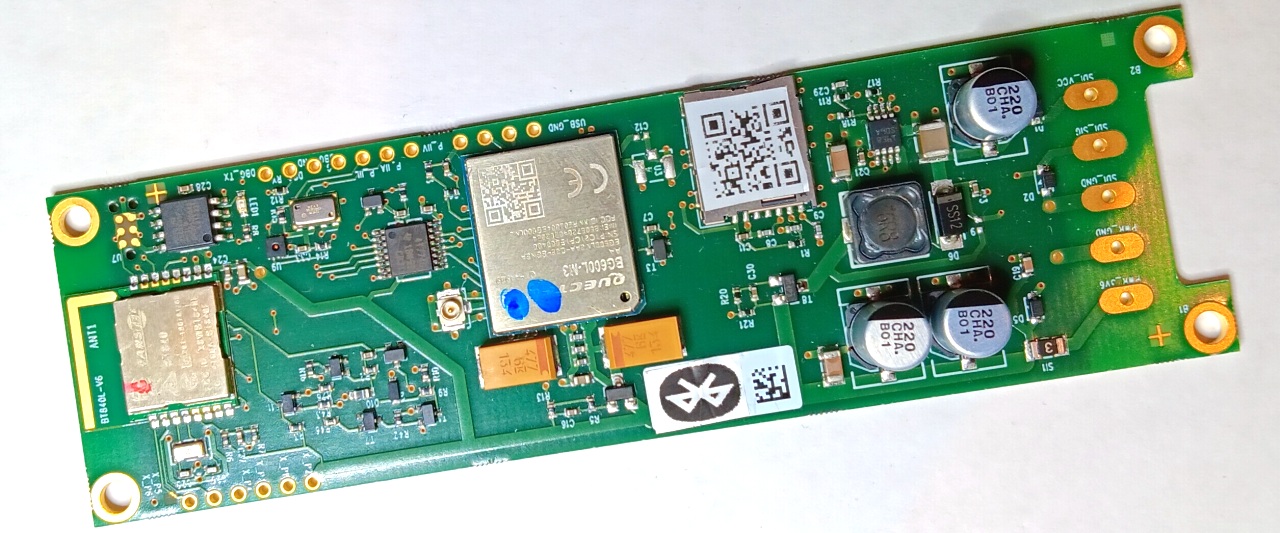
LTX Type1500 - An example logger with BLE, LTE-M/-NB and SDI-12 sensor bus. Also available with: LoRaWAN, LTE cat-1, LTE450 (Critical Infrastructure), NTN (Non-terrestrial networks)
Read the full story How JesFs is used on LTX Type1500
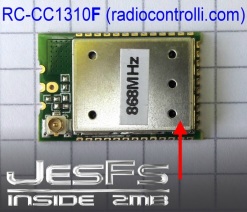
The RC-CC1310F module from radiocontrolli.com with 2MB built-in!
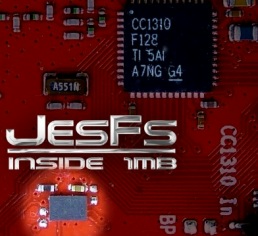
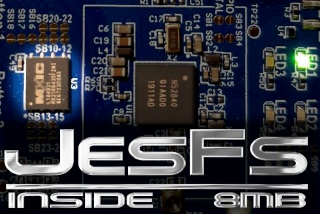
Up to 16MB – plenty of room for your files!
JesFs is a "flat" file system – no directories, just files. Simple and effective!
*$abc/hello\world&.bin$*, sensor_data.log, fw_v2.3.1.binMinimal RAM usage:
Only for test on PC: JesFs_main.c
Compile the demo either within an IDE or as a 'single liner' with 'gcc' (optionally with -std=c99):
gcc -o jesfs.exe JesFs_main.c jesfs_hl.c jesfs_ml.c platform_WIN/JesFs_ll_pc.c platform_WIN/tb_tools_win.c -I. -DWIN32 -Wall
JesFs itself is modular and portable:
Low-level drivers: JesFs_ll_xxxxx.c (platform-specific)
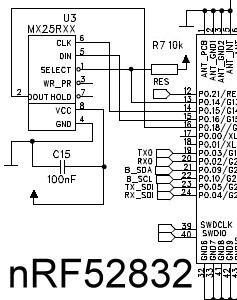
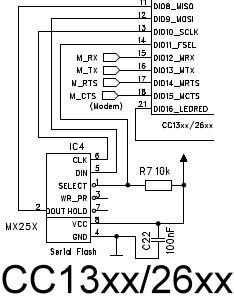
JesFs_ll_pca100xx.c for nRF52JesFs_ll_tirtos.c for CC13xx/CC26xxJesFs_ll_pc.c for WindowsMid-level: jesfs_ml.c (flash management, hardware-independent)
High-level: jesfs_hl.c (file API, hardware-independent)
Header: jesfs.h (your main interface)
Per platform a toolbox defines some helpers:
tb_tools_xxx.c (UART, Clock, LEDs, etc.)uint32_t _time_get(void): returns the unsigned UNIX timestamp, which goes up to approximately year 2100.int16_t _supply_voltage_check(void): returns 0 if the power is valid, at least for the time of the operation (see code).As a Rule-of-thumb: 1Farad is 1Volt/1Coulomb. This means e.g. for 100µF and an average 10mA for 2msec, the Voltage will drop 0.2V. Hence VDD should be at least 0.2V higher here than the minimum.
Special flag SF_OPEN_EXT_SYNC marks files that are relevant for external synchronization.
Important: this bit is not used internally by JesFs core logic. That is exactly why it is useful for application-level workflows, for example to automatically mirror relevant files to a cloud-side "digital twin".
There's even a PHP framework for mapping JesFs files to web servers.
Visit joembedded.de for more details.
The nRF52840 DK comes with a massive 8 MB Serial Flash – perfect for JesFs!
Setup:
C:/nordic/nRF5_SDK_16.0.0_98a08e2/own_projects/test/JesFsDemo/Project location: use the SES projects in:
platform_nRF52/nrf52832/ses/platform_nRF52/nrf52840/ses/Works with most CC13xx/CC26xx family chips!
Setup:
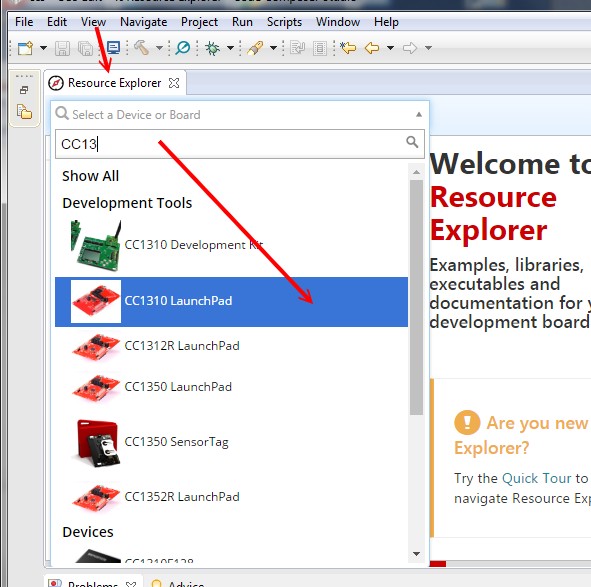
Step 1: Select your Launchpad in Resource Explorer
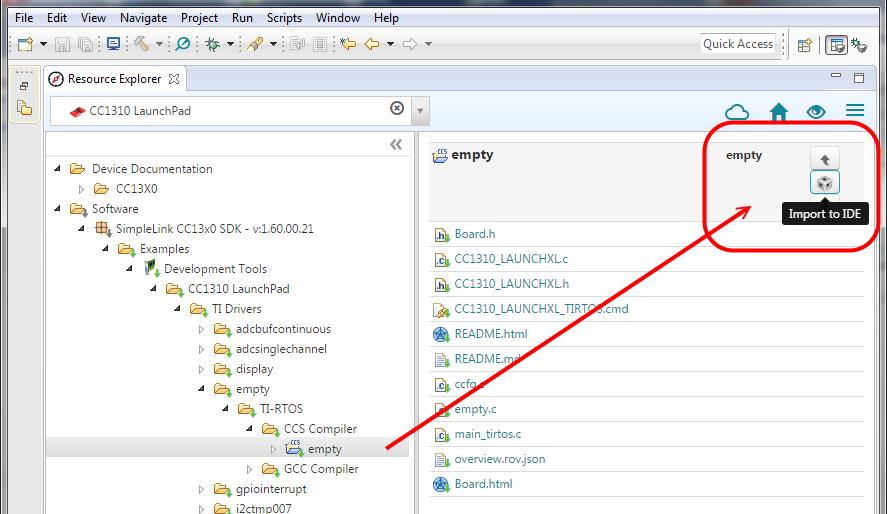
Step 2: Import "empty" project
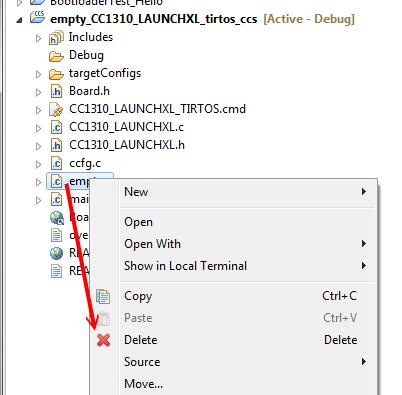
Step 3: Delete empty.c and add all JesFs files
Step 4: Add CC13XX_CC26XX as Preprocessor Definition
(Project Options -> Preprocessor Definitions)
Step 5: Start Terminal and test!
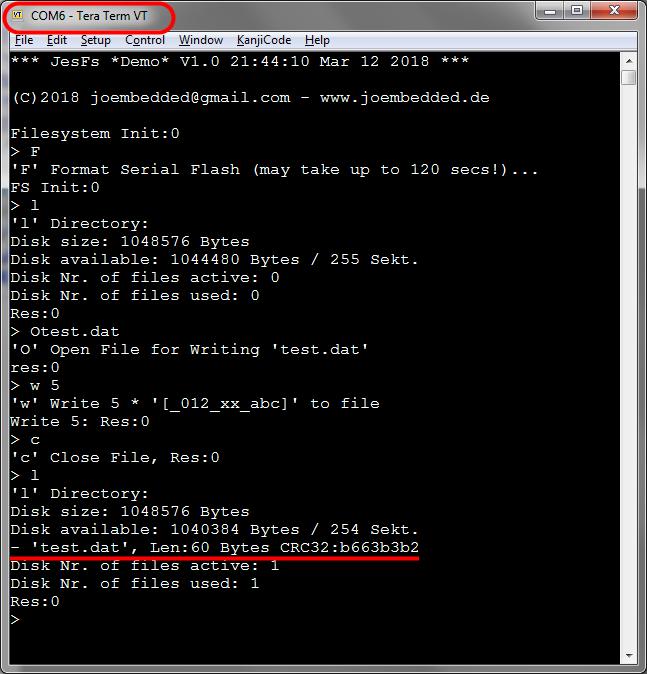
Demo commands:
> O test.dat        // Open "test.dat" for writing
> W 5               // Write 5 test blocks
> c                 // Close file
> v                 // View directory (show files)
Tips:
Perfect for developing and testing on your PC!
Features:
JesFs_ll_pc.c driver (simulates flash in RAM)m HEXADDRFlash image example:
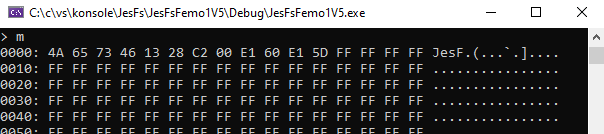
(Magic value "4A 65 73 46" = "JesF", followed by Flash ID and format timestamp)
JesFs plays perfectly with JesFsBoot, a secure bootloader for ARM Cortex-M cores!
Note: Bootloader is optional – JesFs works perfectly standalone too! Documentation for JesFsBoot: Just drop me a note.
fs_read(), fs_check_disk(), and fs_open()JESFS_ERR_BASEfs_notexists()fs_* functions check _supply_voltage_check() on entry_supply_voltage_check()fs_strcpy() -> fs_strncpy() and minor optimizationsfs_date2sec1970()fs_date2sec1970()Full changelog in source files
A: Use escape sequences (0xFE 0x01 for 0xFF) or use ASCII/Base64 encoding for your data!
A: Yes! JesFs works with any NOR-flash, internal or external. Only check if single byte writes are possible.
A: Typically 1,000 to 1,000,000 erases per sector (check your flash datasheet). JesFs's wear leveling maximizes lifetime.
A: Nope! JesFs runs on Bare-Metal today; Zephyr RTOS support is coming soon.
A: You can have as many files open as RAM allows, but only one write instance per file (which makes sense, right?).
MIT License – Use it freely in commercial, scientific, or hobbyist projects!
JesFs is actively maintained and used in thousands of devices. Found a bug? Have a feature idea? Contributions welcome!
Whether you're building a weather station at 3000m altitude, a smart home device, an industrial sensor, or just tinkering with IoT – JesFs has got your back!
Thank you for your interest in JesFs!
– Jo
| Feature | Specification |
|---|---|
| Min. RAM | ~200 Bytes |
| Min. Code Size | ~8kB (with bootloader) |
| Flash Support | 8kB - 16MB (opt. 2GB) |
| Max Files | ~1000 (4KB sectors) |
| Filename Length | 21 characters |
| Read Speed | 0.5 - 3.75 MB/s |
| Write Speed | 30 - 70 kB/s |
| Deep Sleep Current | <0.5µA |
| Wakeup Time | Few µsec |
| CRC Support | CRC32 (ISO 3309) |
| Platforms | nRF52, CC13xx/26xx, SAMD20, MSP430, Windows, ... (Zephyr RTOS support coming soon) |
| License | MIT |
| Status | Production-ready, thousands of deployments |
joembedded/JesFs is a public repo on GitHub by joembedded. Jo's Embedded Serial File System (for Standard Serial NOR-Flash).
It declares the MIT license on GitHub.
Its maker tagged it for Windows. That is declared by the maker; Take My Repo has not tested it.
Open "Take it" on its page: Take My Repo writes an install plan for your machine and hands it to your AI agent (Claude Code, Codex or Cursor), which asks you before each step. Take My Repo has not tested it on any machine.
Its last change on GitHub was on 2026-07-04. GitHub counts 0 open issues and pull requests. Take My Repo does not judge from that whether it is maintained.
Nobody has reviewed it on Take My Repo yet, which says nothing about its quality.
Go compiler for small places. Microcontrollers, WebAssembly (WASM/WASI), and command-line tools. Based on LLVM.
The Swiss Army knife for 802.11, BLE, HID, CAN-bus, IPv4 and IPv6 networks reconnaissance and MITM attacks.
MNN: A blazing-fast, lightweight inference engine battle-tested by Alibaba, powering high-performance on-device LLMs and Edge AI.
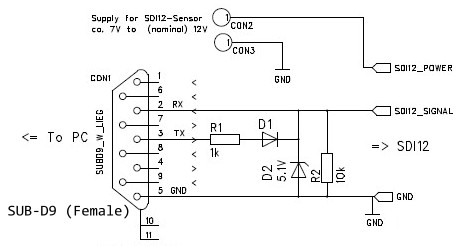
An open implementation for a SDI12 Sensor node, based on Ultra-Low-Power Bluetooth CPU